
In This Article
Accessing the Meeting Effectiveness Summary Report
Overview
The Meeting Effectiveness Summary Report provides a table view showing overall meeting effectiveness per meeting per week over a specified period. This report helps managers and administrators monitor whether individual meetings are meeting their effectiveness targets by displaying effectiveness percentages for each meeting across multiple periods. The report uses color-coded percentages to quickly identify meetings that are meeting or missing their effectiveness targets.
The report is particularly useful for tracking meeting effectiveness trends over time, identifying which meetings consistently meet or miss effectiveness targets, comparing effectiveness across different meetings, and supporting continuous improvement in meeting quality.
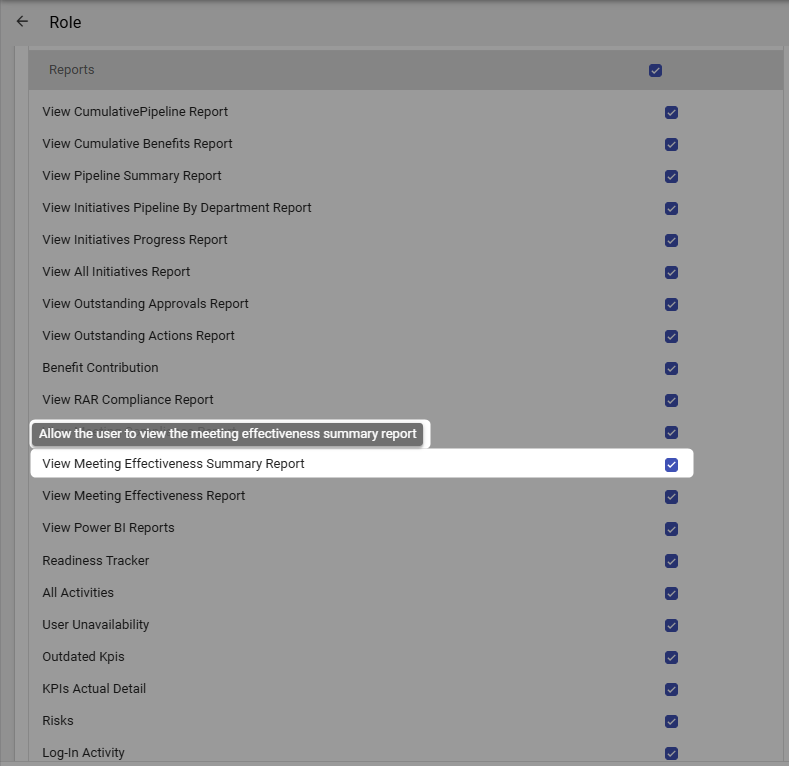
Note: Users need the View Meeting Effectiveness Summary Report permission enabled in their role under Reports to be able to access and use this report. If you cannot view this report, please contact your system administrator to verify your permissions.
Accessing the Meeting Effectiveness Summary Report
To access the Meeting Effectiveness Summary Report:
- Navigate to the Reports module from the top navigation bar
- Select Meeting Effectiveness Summary from the list of available reports
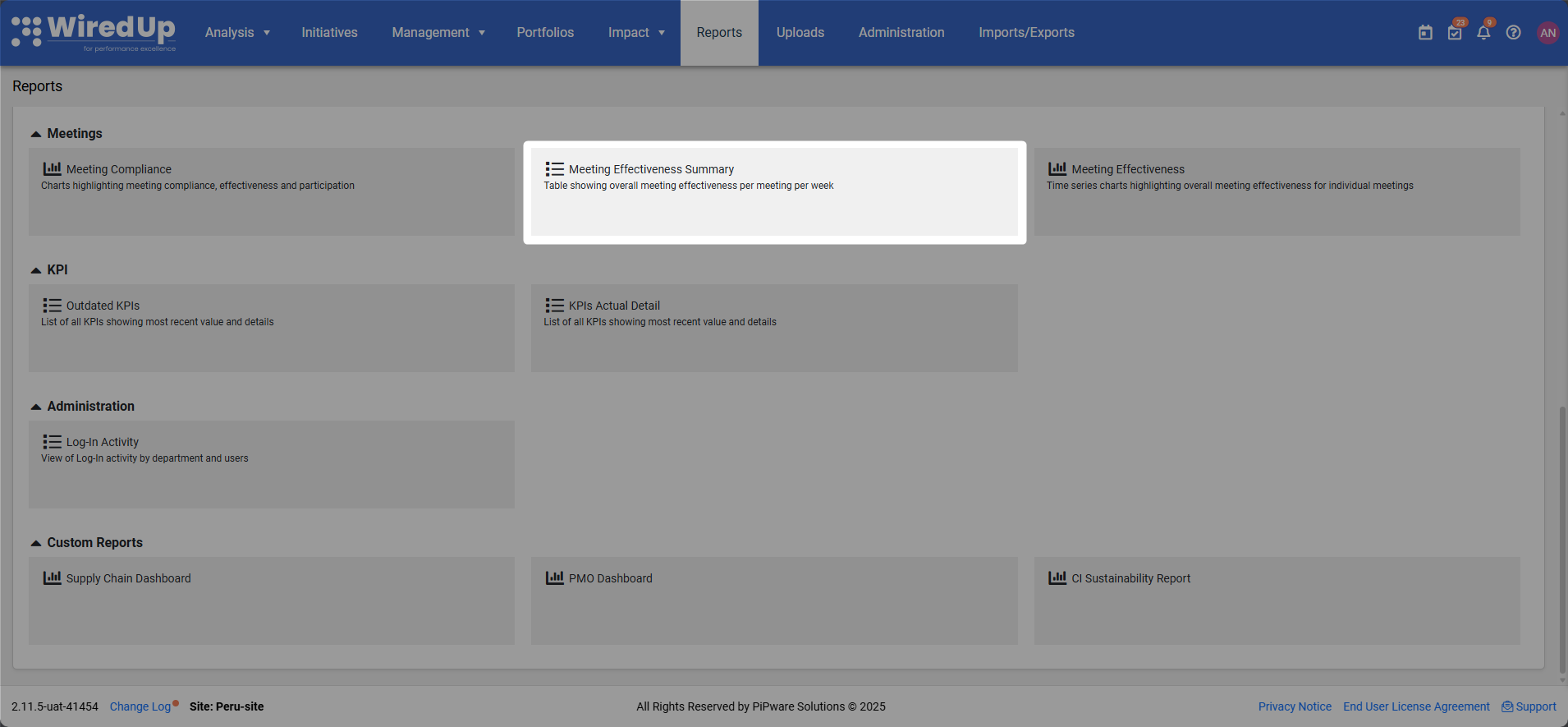
- The report will display with default filters applied (Report Date set to today's date and Periods set to 7), showing a table of meetings and their effectiveness percentages
Understanding the Report
The Meeting Effectiveness Summary Report consists of a table displaying meeting effectiveness data organized by meeting and period.
Table Structure
The report displays information in the following format:
Table Columns: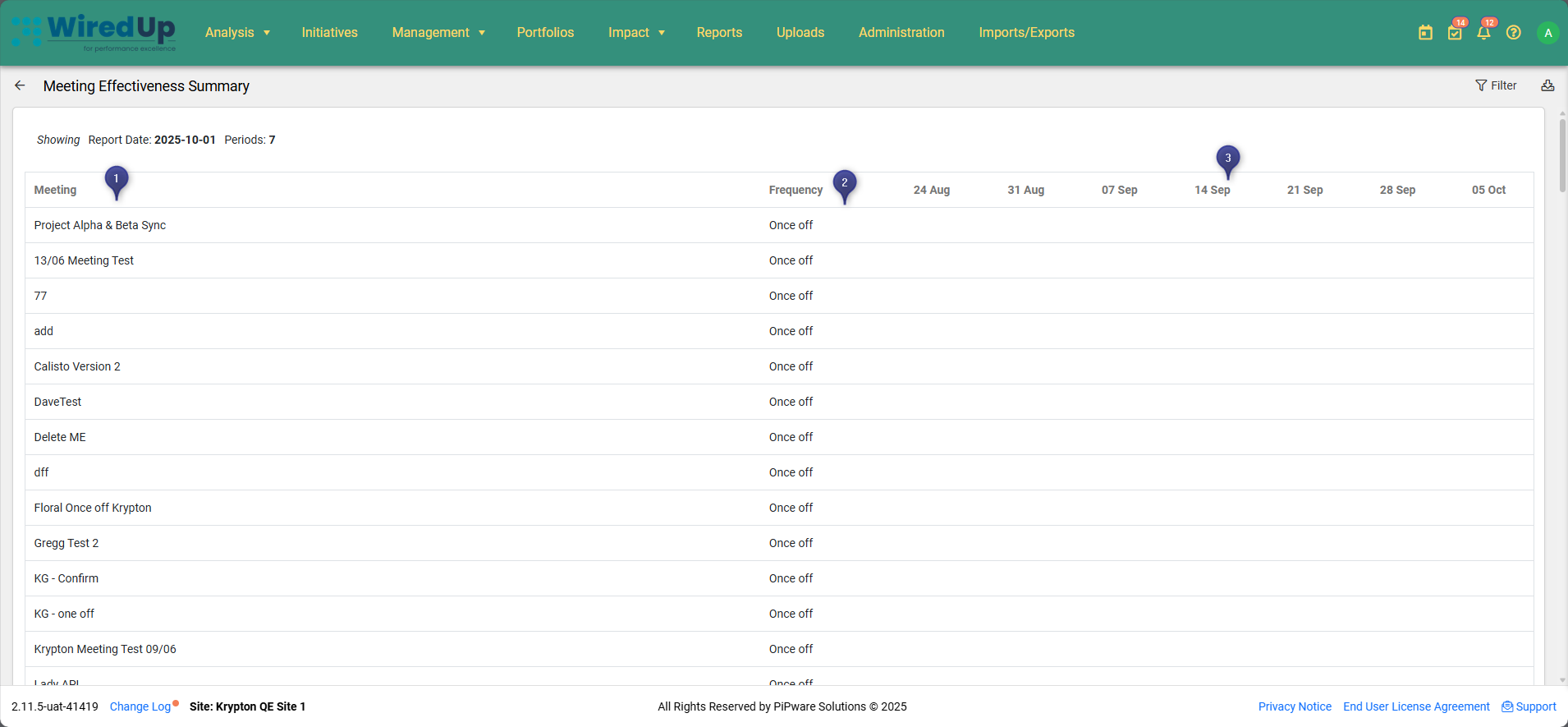
- Meeting: The name of the meeting
- Frequency: How often the meeting occurs (e.g., Once off, Daily, Weekly)
- Period Columns: Date headers representing each week in the reporting timeframe (e.g., 24 Aug, 31 Aug, 07 Sep, 14 Sep, etc.)
Effectiveness Percentages:
Under each period column, the table displays the meeting effectiveness percentage achieved for that specific meeting during that week:
- Green text: The meeting effectiveness percentage met or exceeded the target for that period
- Red text: The meeting effectiveness percentage fell below the target for that period
Note: Overall Meeting Effectiveness Targets are determined by Quality targets configured on Administration > Meeting Targets. For each meeting instance, these targets are set on Meetings > Edit Meeting > Targets (these targets take precedence over overall targets set on Admin)Table Features
- Color Coding: Effectiveness percentages are color-coded to provide quick visual identification of performance:
- Green: The meeting effectiveness percentage met or exceeded the target
- Red: The meeting effectiveness percentage fell below the target
- Multiple Frequencies: The report displays meetings with various frequencies (Once off, Daily, Weekly, etc.) in a single view
- Period-by-Period Tracking: Each column represents a specific week, allowing users to track effectiveness trends over time
Report Filters
The Meeting Effectiveness Summary Report includes several filters to customize the data displayed. These filters appear in the Filter panel on the right side of the screen when you click the Filter button.
Applying and Clearing Filters:
- Click the Filter button (top-right corner) to apply your selected filter criteria
- Click the Clear button to reset all filters to their default values
- Applied filters will update the table to display only the selected meetings and periods
Available Filters:
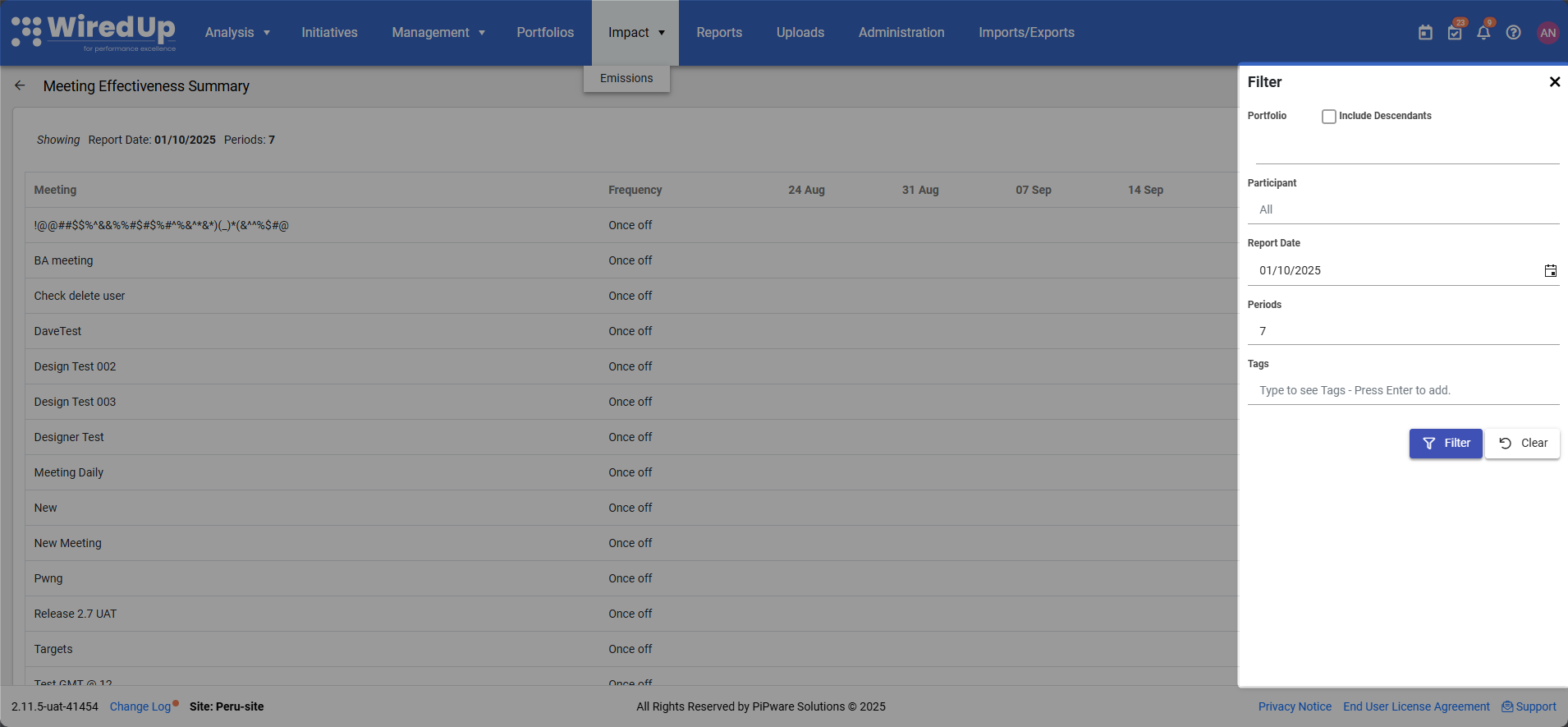
Portfolio
- Select the specific portfolio or department to view
- Include Descendants checkbox: When enabled, includes meetings from all sub-portfolios and departments under the selected portfolio
- Allows you to focus on meeting effectiveness from specific organizational areas
Participant
- Filter by specific meeting participants
- Default setting shows "All" participants
- Helps track meeting effectiveness for meetings involving specific individuals
Report Date
- Select the end date for the reporting period
- Default setting is today's date (format: DD/MM/YYYY)
- The report will display data for the specified number of periods leading up to this date
Periods
- Specify the number of periods (weeks) to include in the report
- Default setting is 7 periods
- Determines how many week columns are displayed in the table
Tags
- Filter meetings by associated tags
- Type to search for tags and press Enter to add
- Useful for analyzing effectiveness for meetings with specific classifications or categories
Downloading the Report
The Meeting Effectiveness Summary Report can be exported for offline viewing, sharing, or further analysis: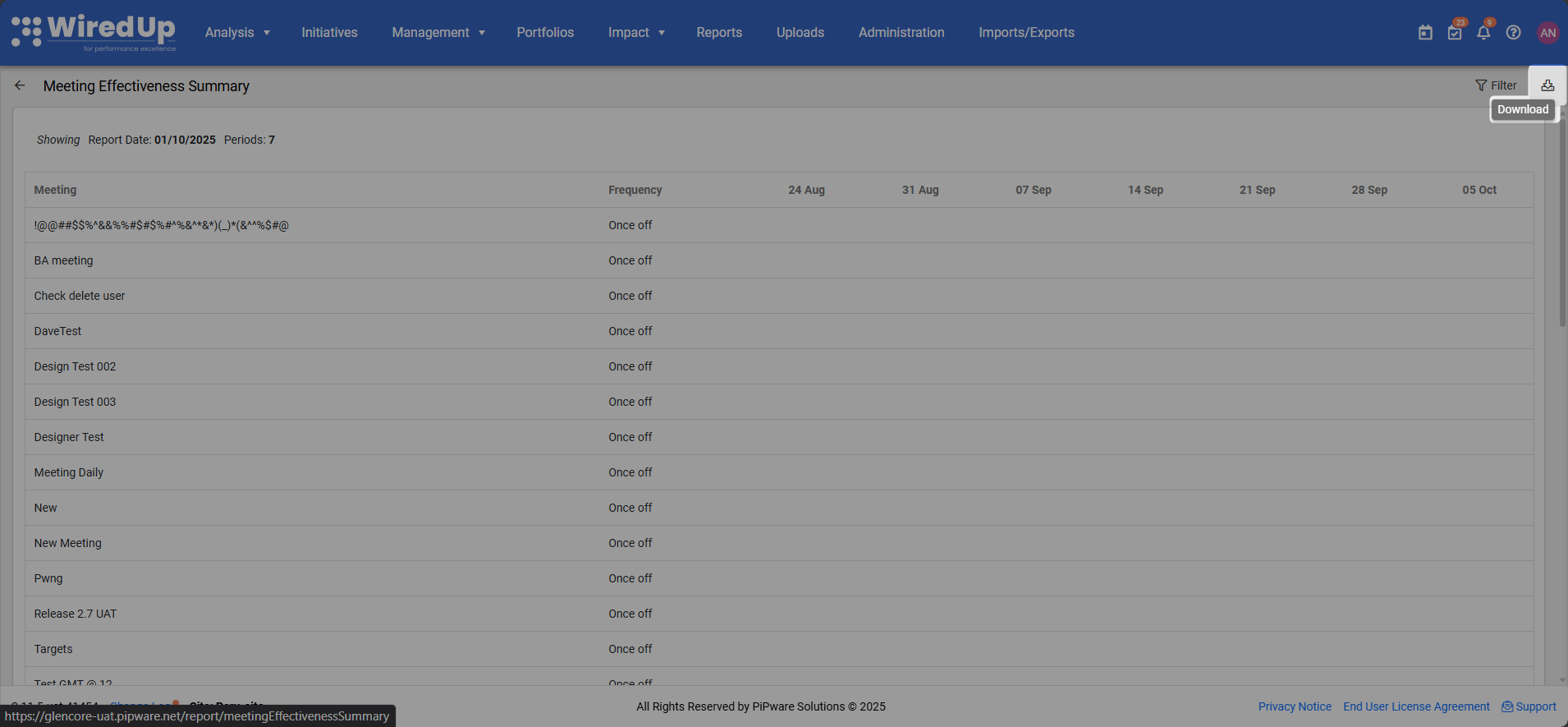
- Click the Download button in the top-right corner of the report
- The report will be exported in Excel format
- The downloaded file will include all currently applied filters and all visible meeting effectiveness data
The Excel export allows you to:
- Perform additional analysis on meeting effectiveness data
- Share the report with stakeholders who may not have system access
- Track meeting effectiveness trends over time by saving periodic exports
- Create custom reports or presentations using the exported data
- Conduct detailed analysis on meeting performance patterns
- Maintain historical records of meeting effectiveness
Best Practices
- Review the report regularly to monitor meeting effectiveness trends and identify meetings requiring improvement
- Focus on red percentages to identify meetings that consistently miss effectiveness targets
- Track trends over time by reviewing multiple periods to see if effectiveness is improving or declining
- Use Portfolio filters to analyze meeting effectiveness across different organizational areas
- Filter by Participant to track effectiveness for meetings involving specific individuals or teams
- Adjust the Periods filter to view longer-term trends or focus on recent performance
- Review meetings with blank cells to ensure meetings are occurring as scheduled
- Investigate consistently red meetings to understand root causes and implement improvements
- Download and archive reports periodically to maintain historical records of meeting effectiveness
- Use the report in management meetings to discuss meeting quality and identify improvement opportunities
- Review target settings to ensure they remain appropriate and achievable
- Set improvement goals for red-performing meetings and track progress over subsequent reporting periods
Related Articles
You may also find these related articles helpful:
- Meeting Compliance Report
- Meeting Effectiveness Report
- Administration - Meeting Targets
- Meetings Module