
In This Article
How do you activate the feature?
How does the feature affect the KPI, Variable and Constant Node?
Configuring Annualization for Individual Nodes
- Annualization Configuration Options
- Default Annualization Behavior
- Understanding the Linked KPI Configuration
- Affected Areas for Annualization Configuration
Overview
The Idea/Initiative VDT features different views for specific analytical purposes: the Baseline View displays annual benefits or improvement of an idea/initiative, while Variance and Benefit Views focus on monthly metrics. We have added the ability to convert monthly default values to annual format within the Baseline View for KPI and Variable, ensuring seamless analysis across both timeframes. This new annualization feature ensures you the flexibility to analyze your data from both monthly and annual viewpoints as needed.
Why Use This Feature
- This enhancement ensures consistency by allowing users to convert monthly default values on KPI nodes to an annual format, as well as apply this conversion to monthly Constant Nodes if needed.
- Facilitate strategic planning by easily comparing and assessing the overall impact of initiatives on an annual basis
- Enhance decision-making with accurate, long-term performance insights that align with business planning cycles
- Meet industry expectations for annual performance assessment and reporting standards
- Gain flexibility in data presentation, ensuring your analysis meets the specific needs of different stakeholders and use cases
How do you activate the feature?
The VDT Baseline Annualization feature is activated internally by the WiredUp team. To activate the feature, kindly contact support at support@wiredup.global
Once the feature has been activated, a site administrator can activate the site setting by selecting any of these options mentioned below:
- For PMO users, the site setting is located on Portfolios > Site Configuration > Settings > VDT > Annualize VDT Baseline View
- For CI users, the site setting is located on Organisation Structure > Site Configuration > Settings > VDT > Annualize VDT Baseline View
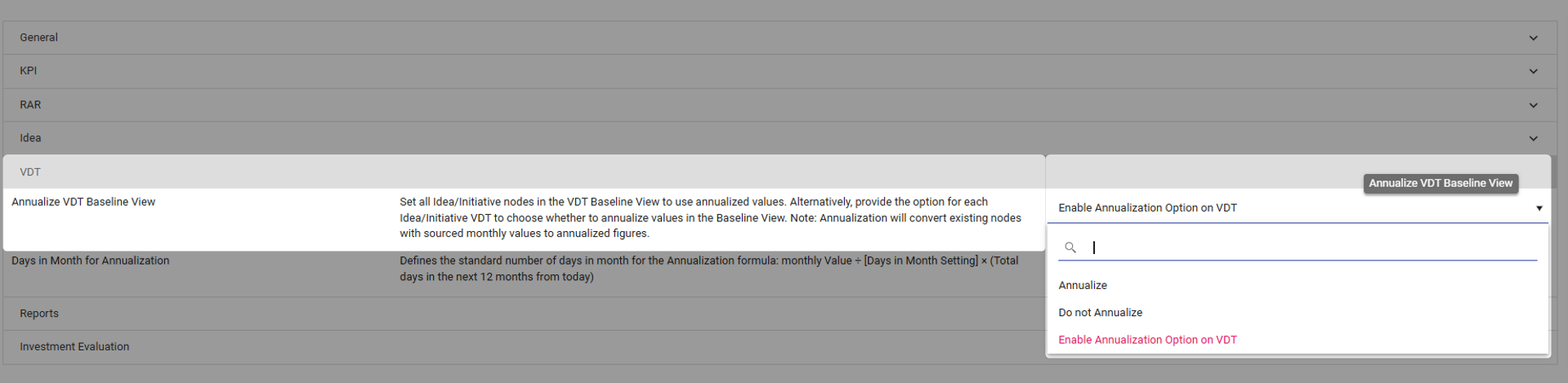
There are 3 settings available for the Annualize VDT Baseline View:
- Annualize: when enabled, this will convert all monthly default baseline and target values on KPI and Variable nodes to annualized values in the Baseline View. The value on the Constant nodes will be Annualized as well.
- Do not annualize: the KPI and Variable Baseline and Target values will continue to be displayed as monthly values in the Baseline view. The Constant node value will continue to be displayed as is.
- Enable Annualization Option on VDT: this setting gives users the option to annualize or not annualize their baseline and target values of KPI and Variable nodes in the Baseline view. The option is also applicable to the values on the Constant nodes as well. The setting is enabled on each VDT by activating or deactivating the Annualize Baseline View on each VDT's settings
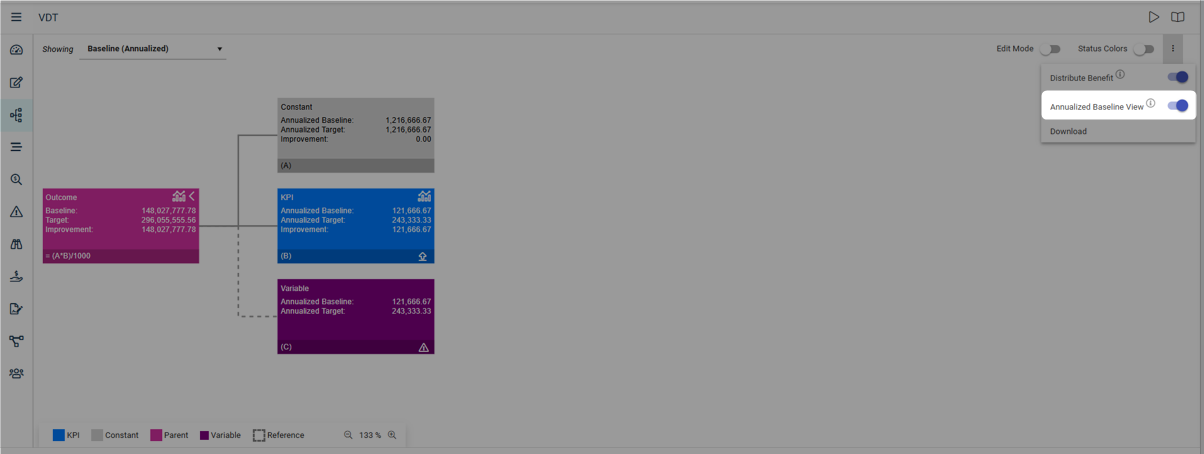
How does the feature affect the KPI, Variable and Constant Node?
Once the feature has been activated either through the Annualize setting or the Enable Annualization Option on VDT setting, On the VDT, the "(Annualized)" label appears next to the Baseline option in the VDT view dropdown.
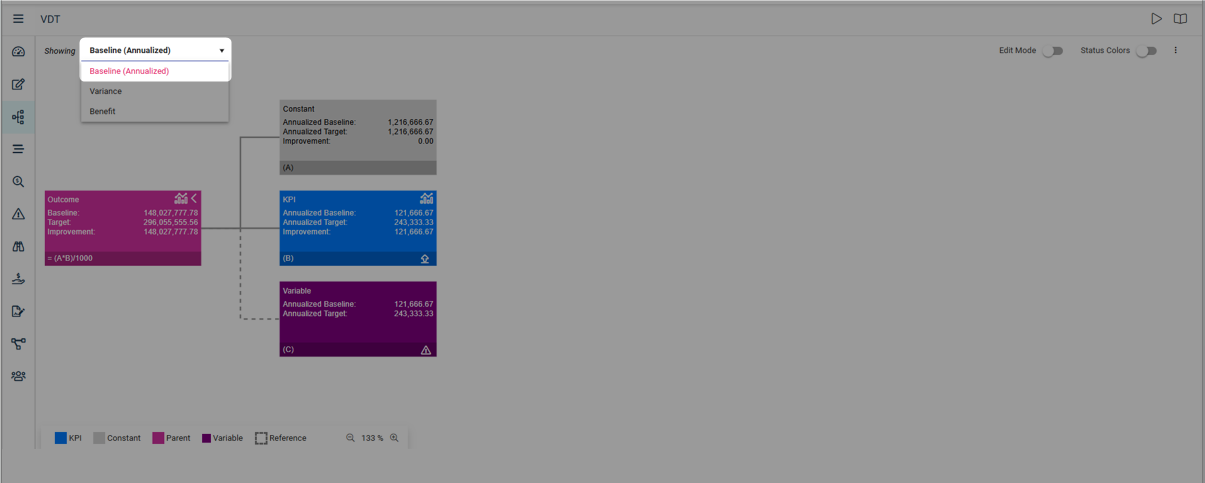
In addition, the following updates will occur on the KPI and Constant nodes in the Baseline view:
KPI and Variable Node
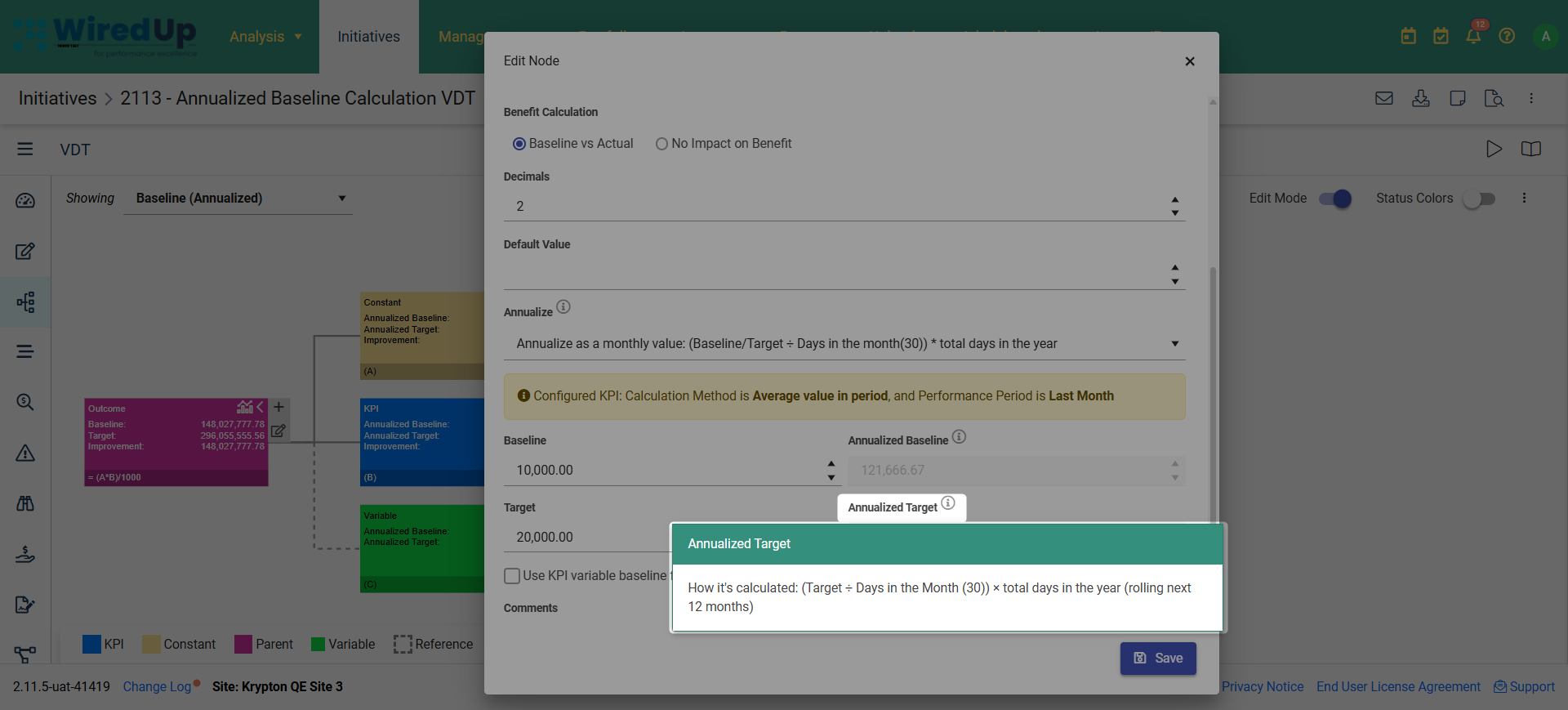
- A new "Baseline (Annualized)" field is added next to the current Baseline field on the KPI node. This new field value read-only and also includes a field help icon to explain the calculation.
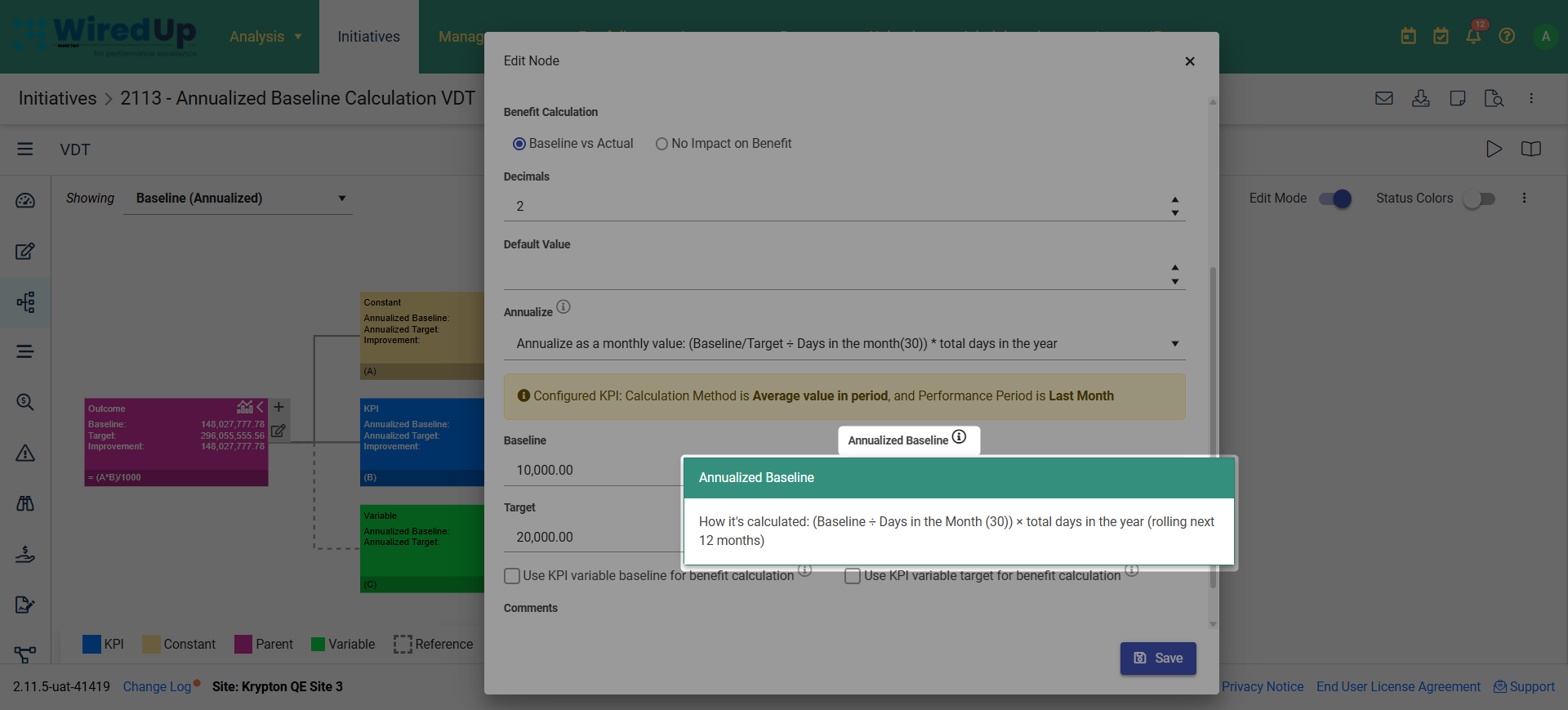
- A new "Target (Annualized)" field is added next to the current Target field on the KPI node. This new field value is read-only and also includes a field help icon to explain the calculation.
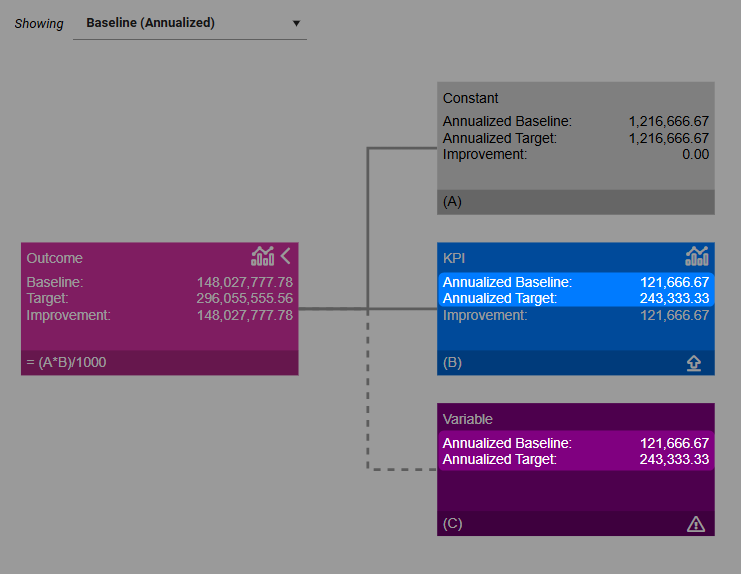
- The values shown on a saved KPI node are the Annualized Baseline and Annualized Target values
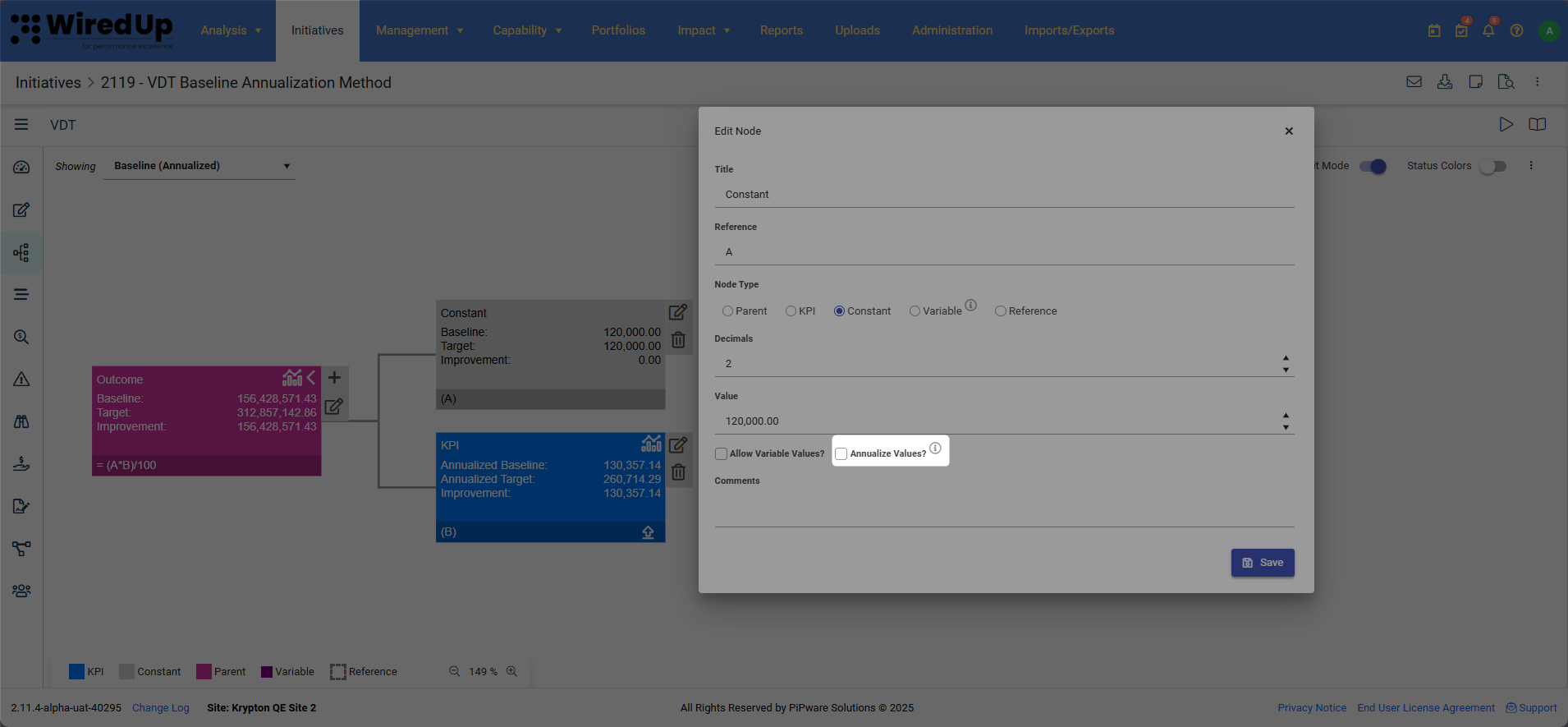
Constant Node
- A new checkbox labeled "Annualize Values?" has been added as well as a field help to serve as a guide. This checkbox is deselected by default
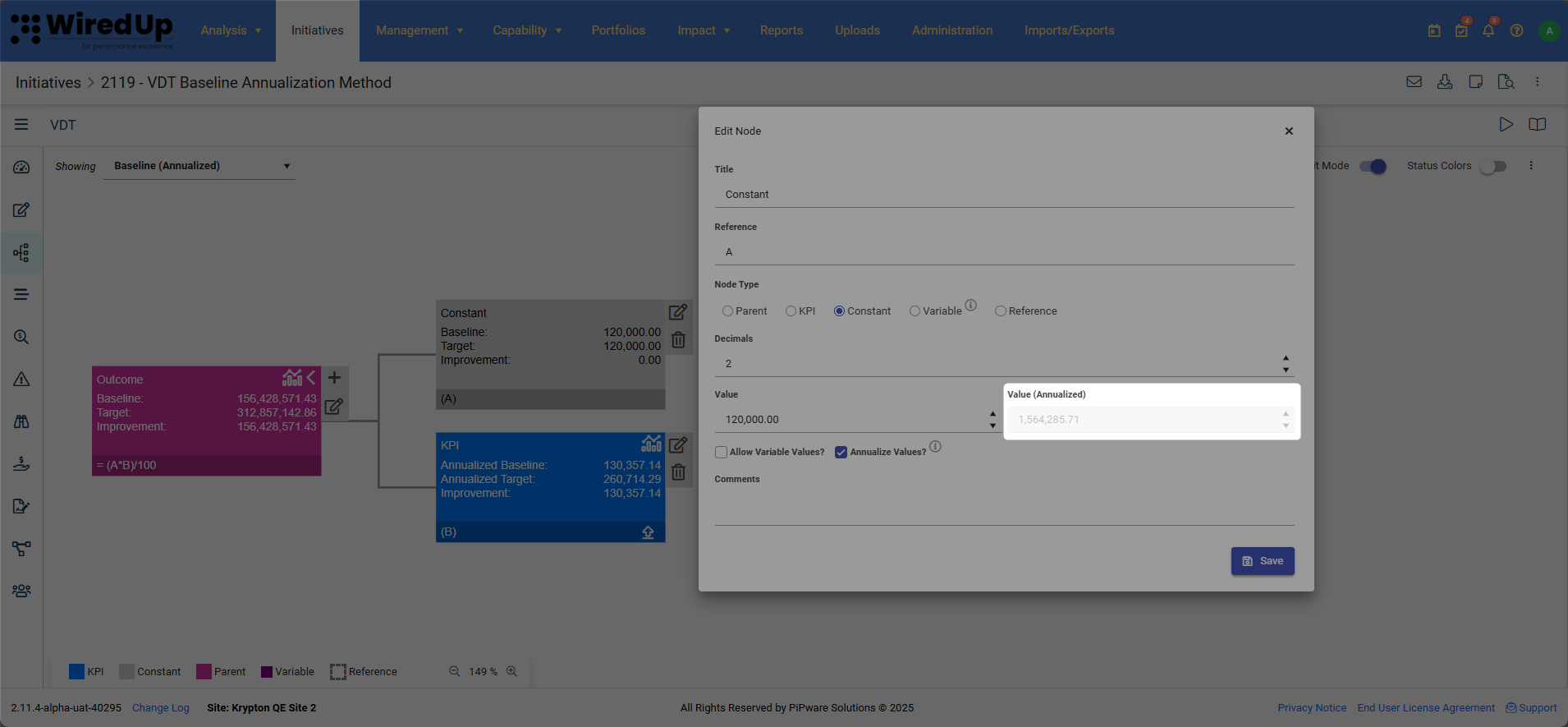
- Once the checkbox has been enabled, the Annualized Value of the constant node will be displayed as read only
- The values shown on a saved Constant node are the Annualized Baseline and Annualized Target values
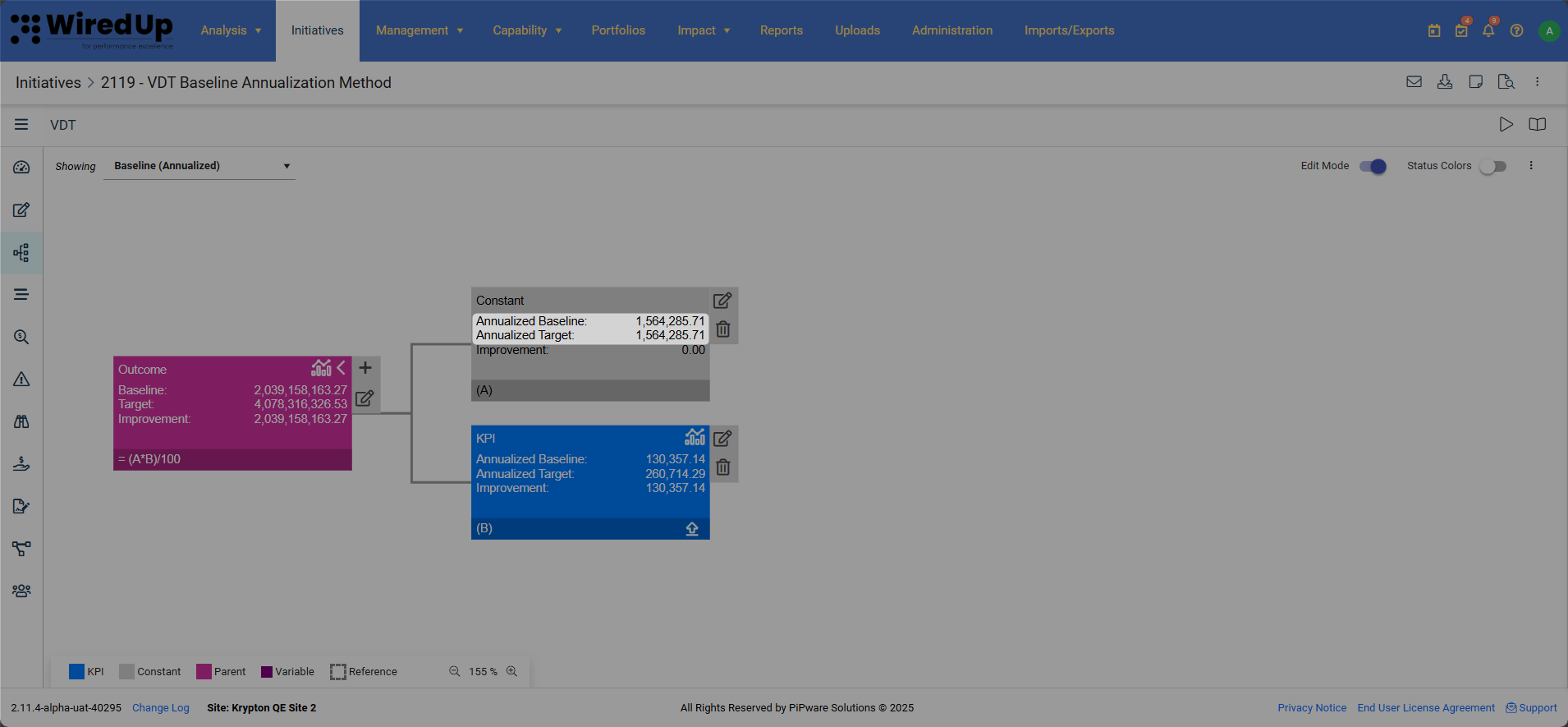
The option to Annualize each variable value of the constant node is also made available when the 'Allow Variable Values' setting is enabled on a Constant node.Configuring Annualization for Individual Nodes
When the VDT Baseline Annualization capability is enabled, you can control how baseline and target values are annualized for each individual node (KPI or Variable) on the Baseline View. This ensures accurate annualized values based on the nature of the data being measured.
Annualization Configuration Options
When editing a node that is connected to a KPI, you will see an Annualize dropdown control. This mandatory field allows you to select the appropriate annualization method for that specific node:
Available Annualization Options:
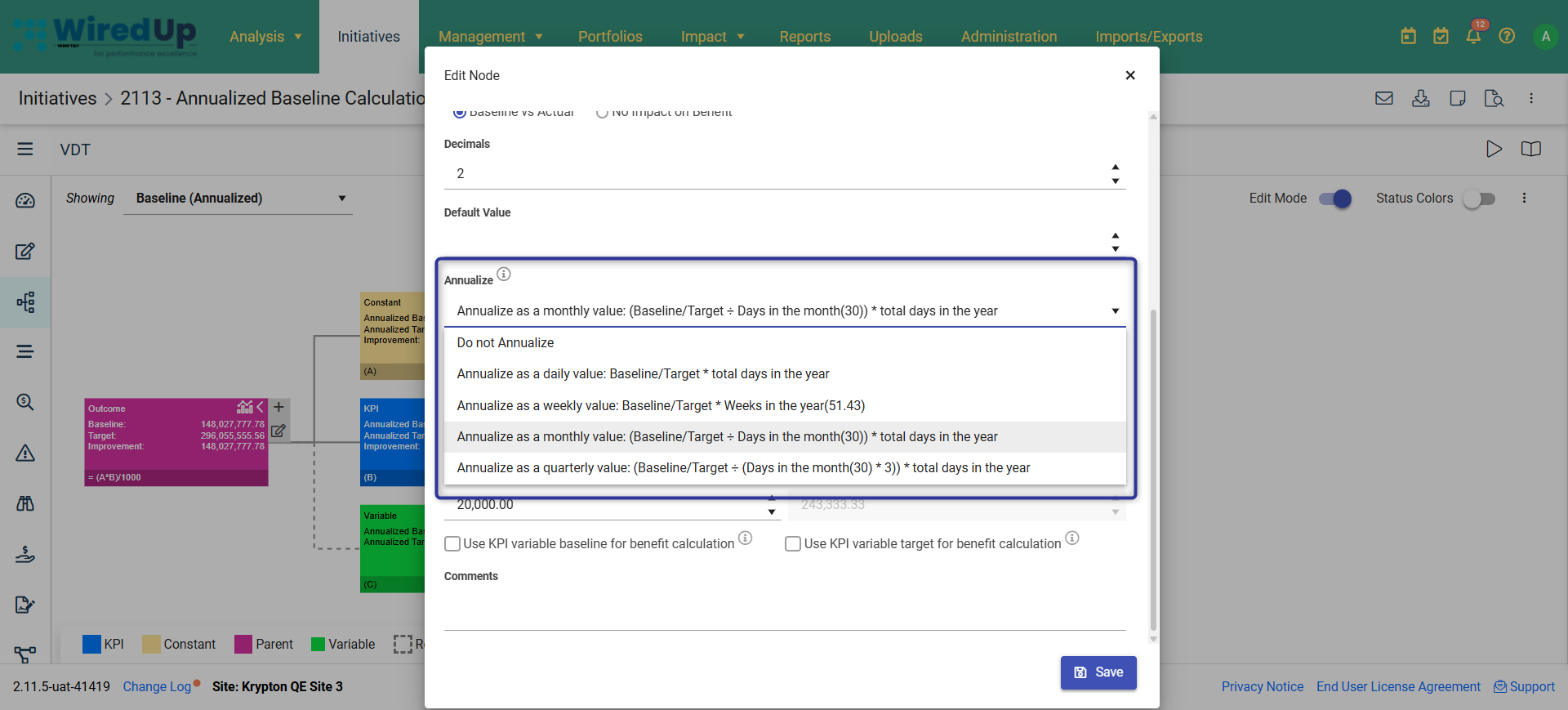
- Do not Annualize – No annualization is applied to the baseline and target values
- Annualize as a daily value – Formula: Baseline/Target × DaysInYear
- Annualize as a weekly value – Formula: Baseline/Target × WeeksInYear
- Annualize as a monthly value – Formula: (Baseline/Target ÷ DaysInMonth) × DaysInYear
- Annualize as a quarterly value – Formula: (Baseline/Target ÷ (DaysInMonth × 3)) × DaysInYear
Annualization Constants
The following constants are used in the annualization formulas:
- DaysInYear = Total days in the year (rolling next 12 months)
- WeeksInYear = (Days in Month Setting × 12) ÷ 7 (calculated to 2 decimal places)
- DaysInMonth = Days in Month Setting (site-configured, can be captured to 2 decimal places)
The DaysInMonth setting is configured at different locations depending on your user type:


For PMO users: Portfolios > Site Configuration > Settings > VDT > Days in Month for Annualization
For CI users: Administration > Organisational Management > Site Configuration > Settings > VDT > Days in Month for Annualization
Default Annualization Behavior
The system automatically selects a default annualization option based on the linked KPI's configuration to reduce guesswork and ensure sensible starting values:
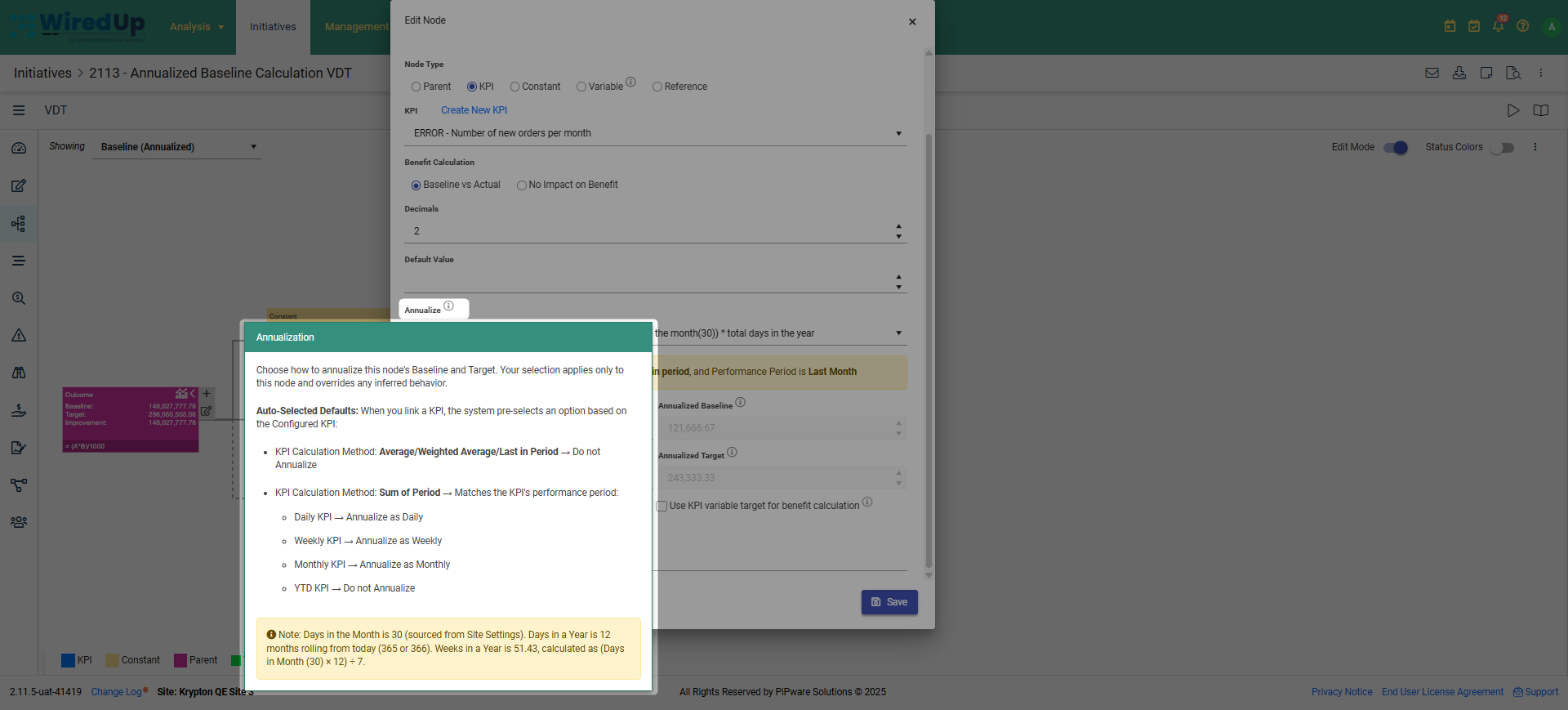
Note: You can override the default selection at any time by choosing a different option from the dropdown. Your selection will be saved and persist for that node.1. For Existing Nodes:
The dropdown defaults to "Annualize as a monthly value"
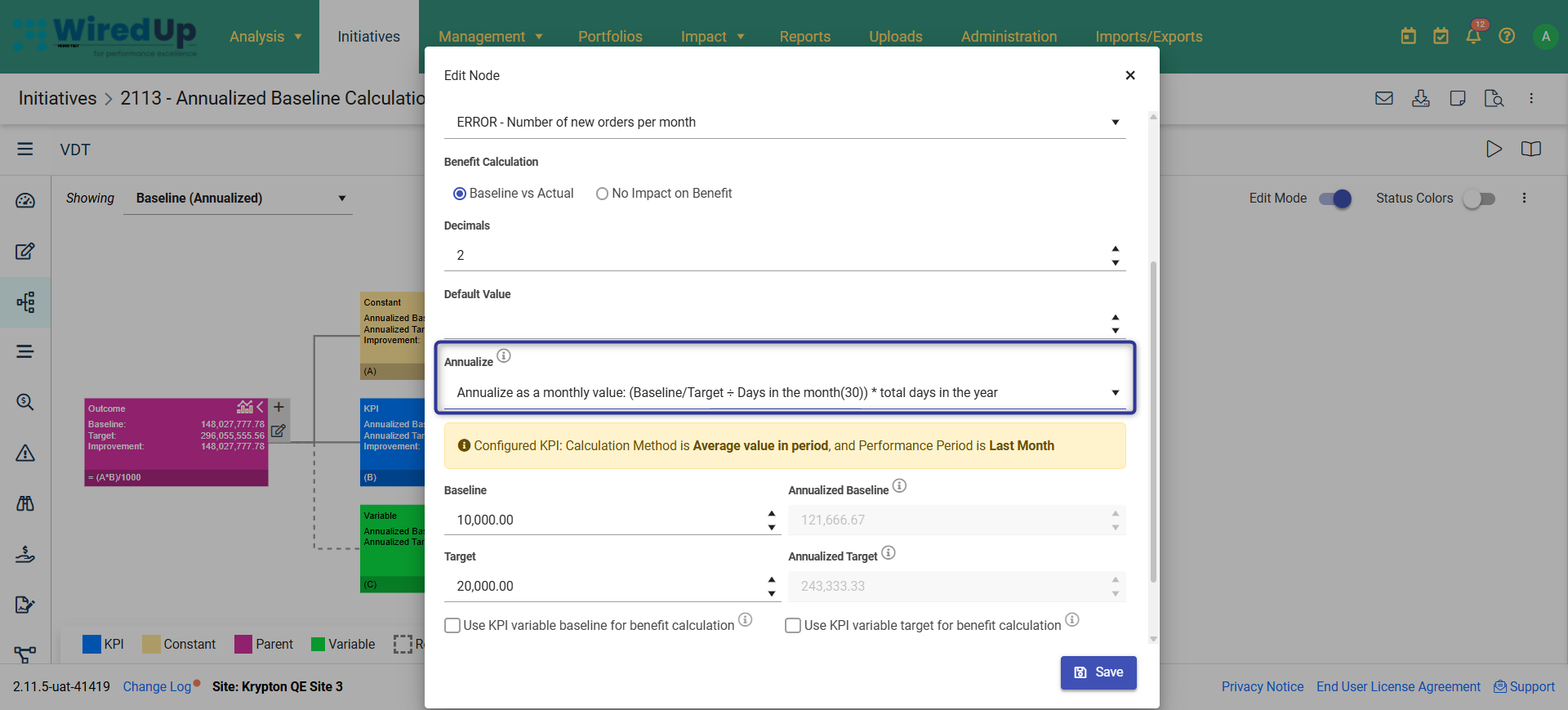
2. For New Nodes: The default selection is determined by the KPI's Value Calculation Method and Performance Period:
- If Value Calculation Method is Average, Weighted Average, or Last in Period:
- Default: "Do not annualize" (Performance Period is not considered)
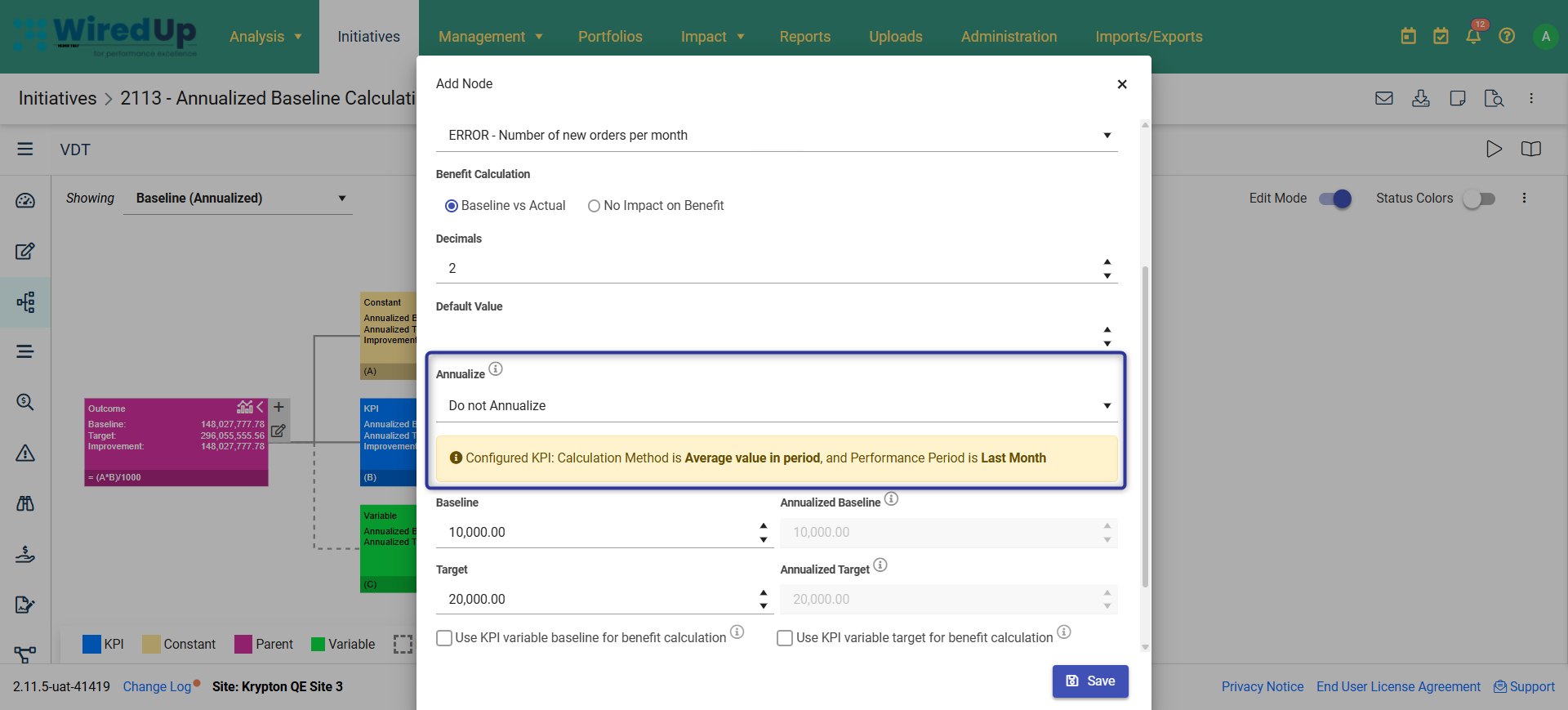
- Default: "Do not annualize" (Performance Period is not considered)
- If Calculation Method is Sum of Period:
- Daily Performance Period → "Annualize as a daily value"
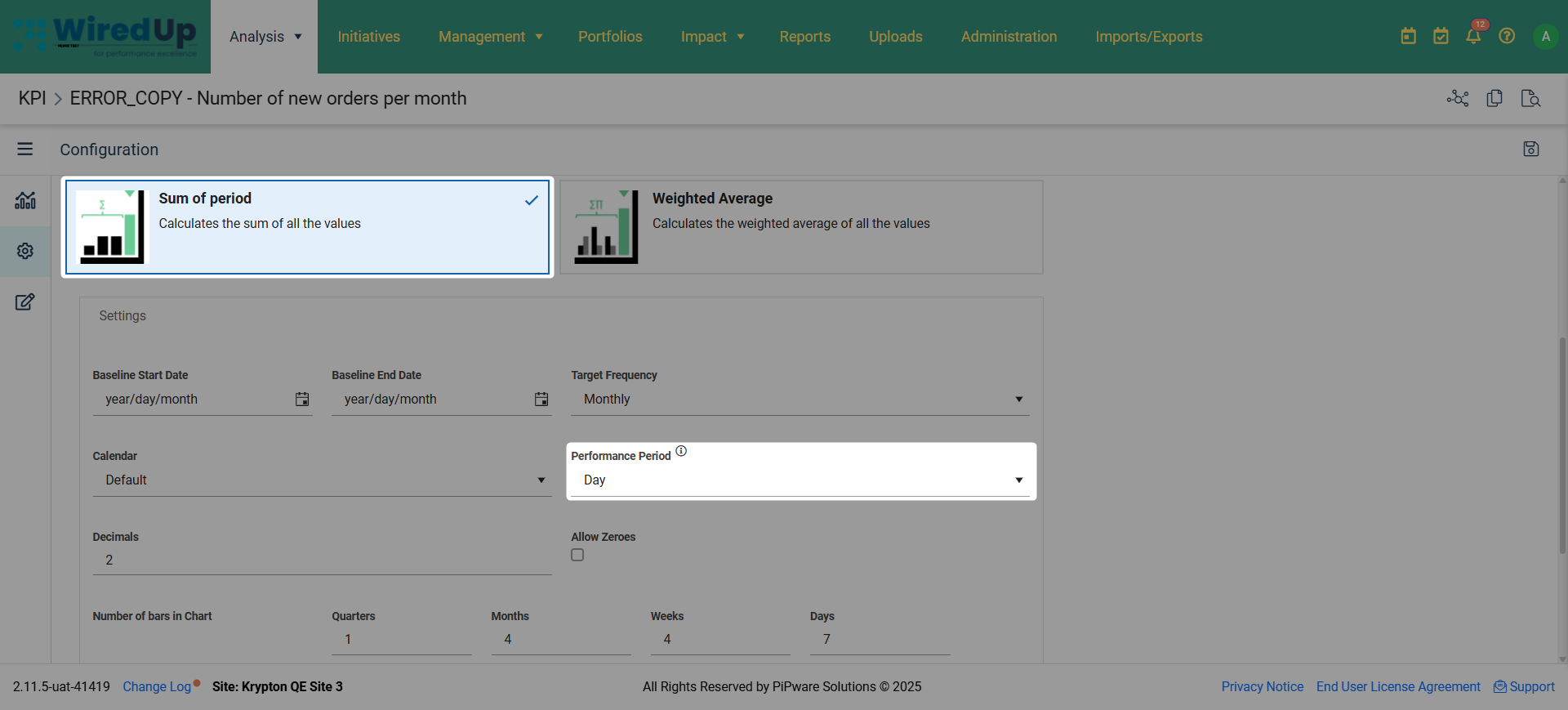
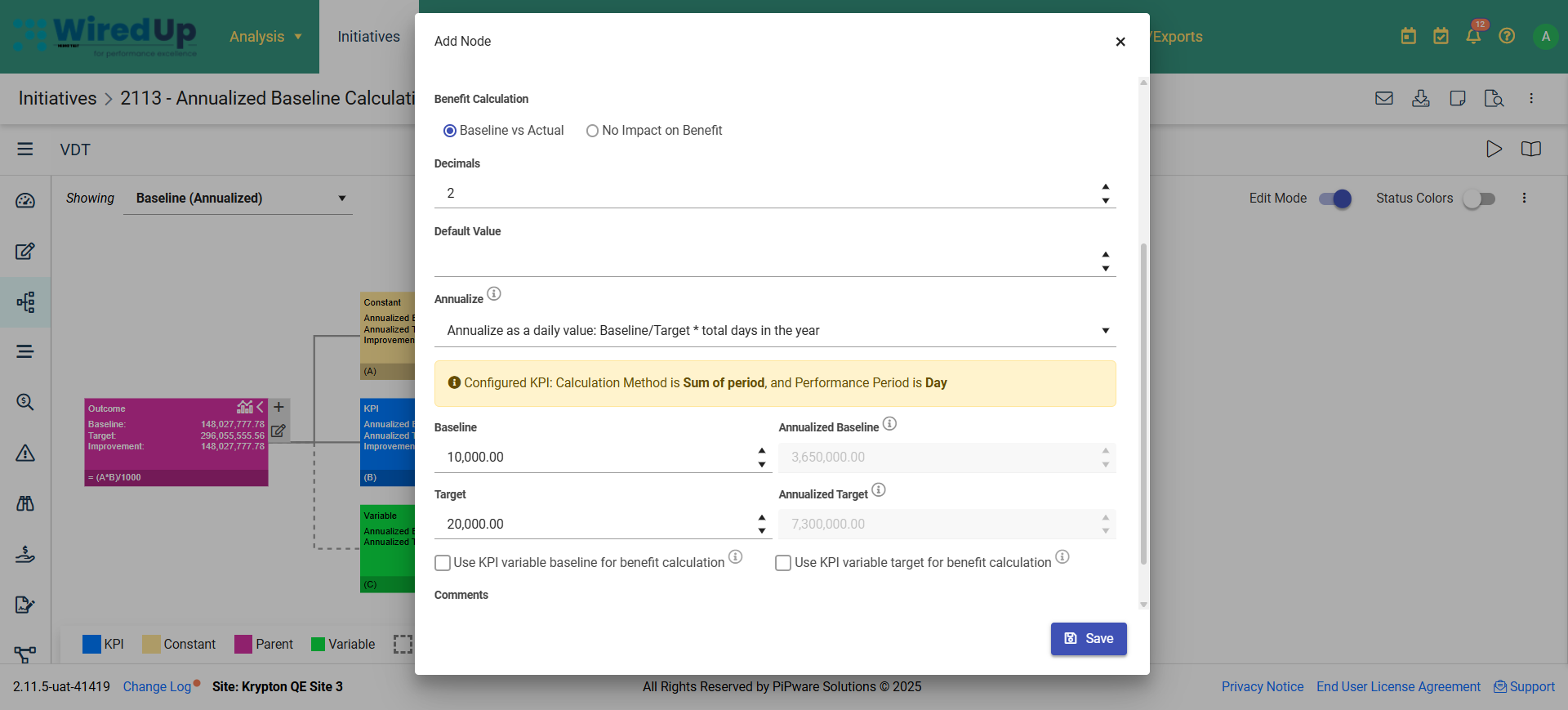
- Weekly Performance Period → "Annualize as a weekly value"
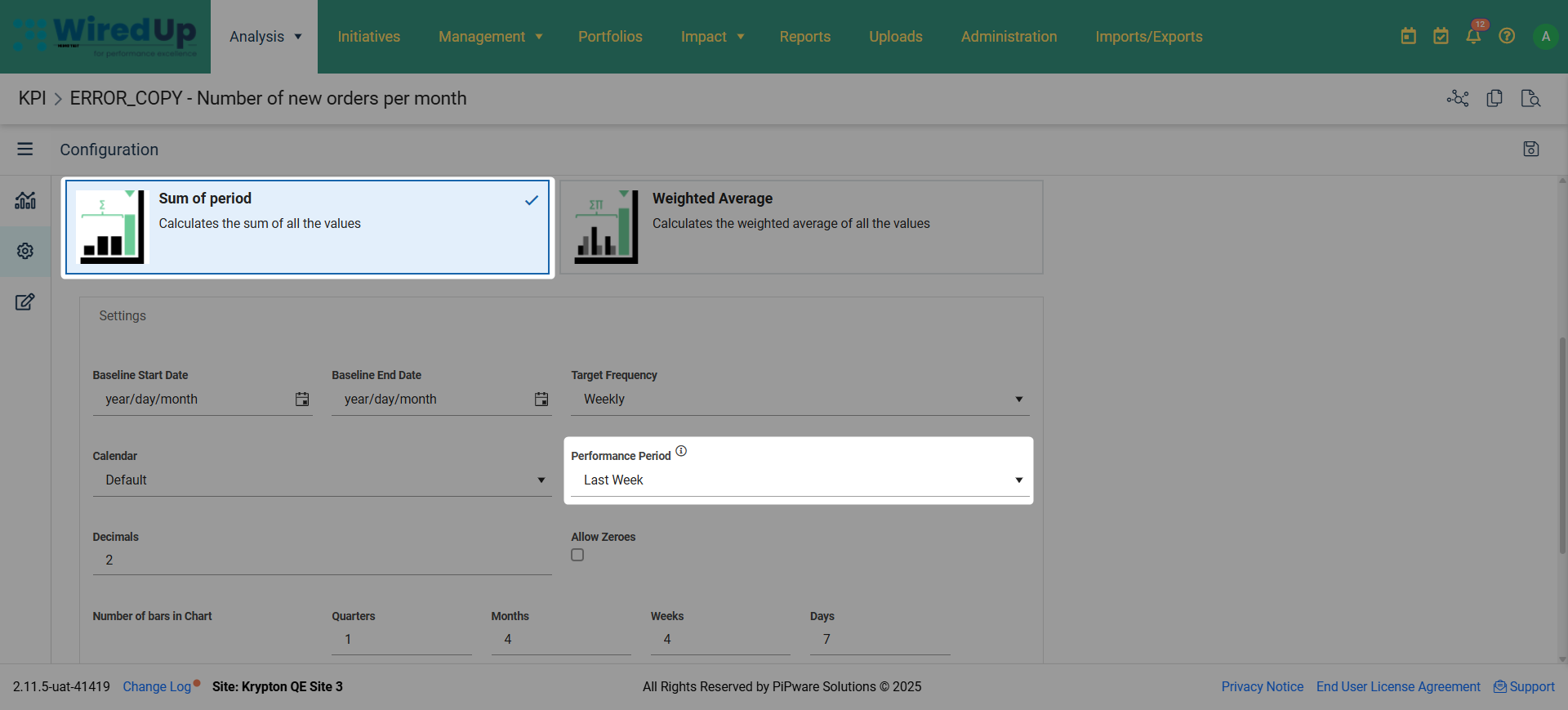
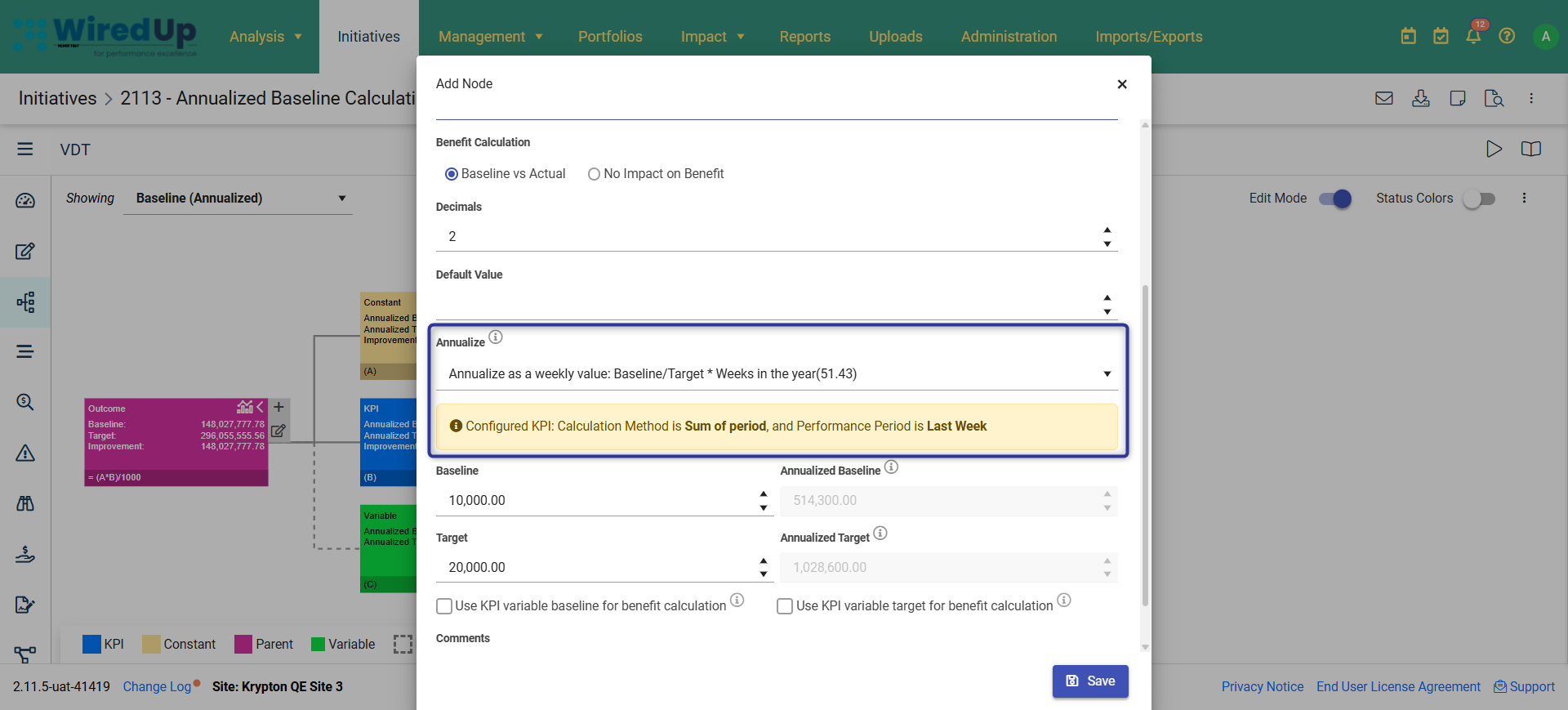
- Monthly Performance Period → "Annualize as a monthly value"
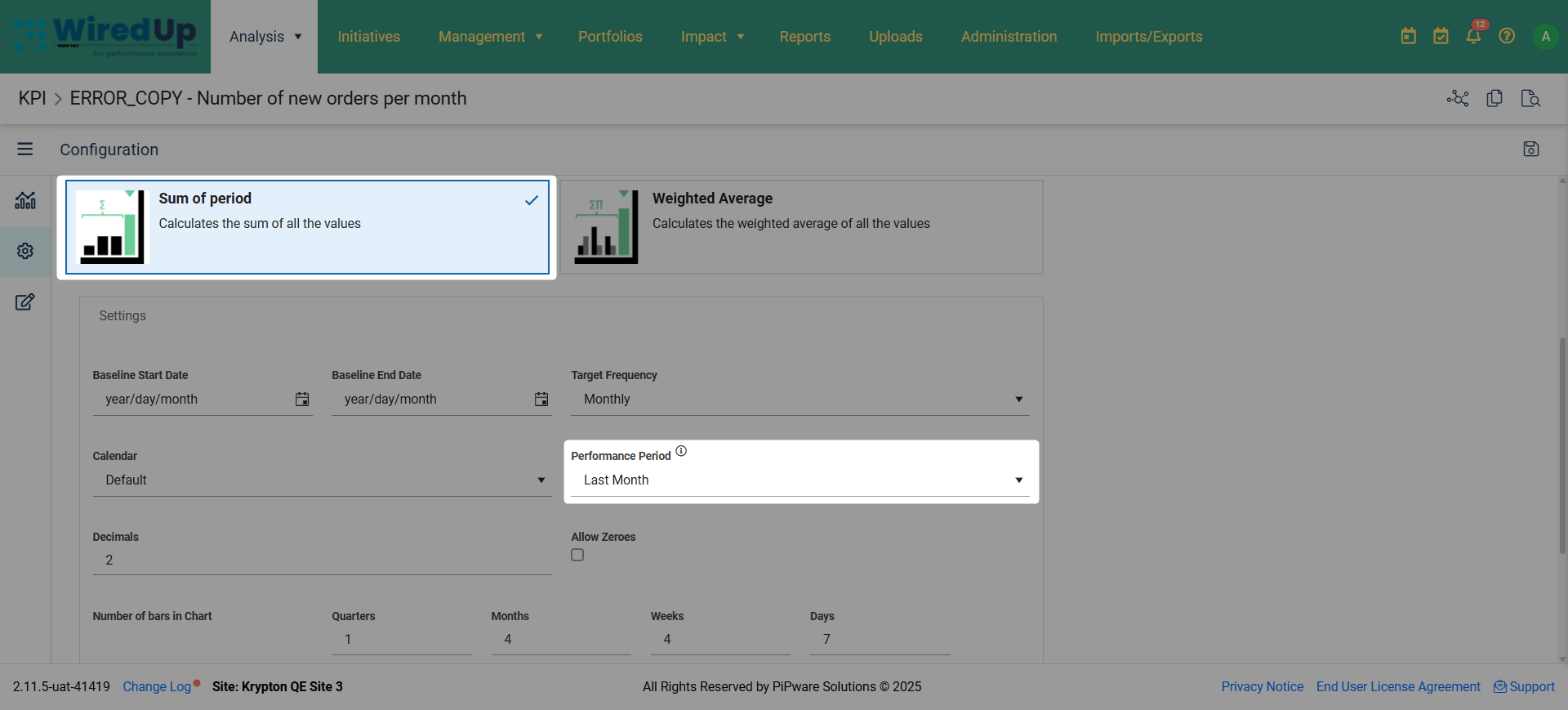
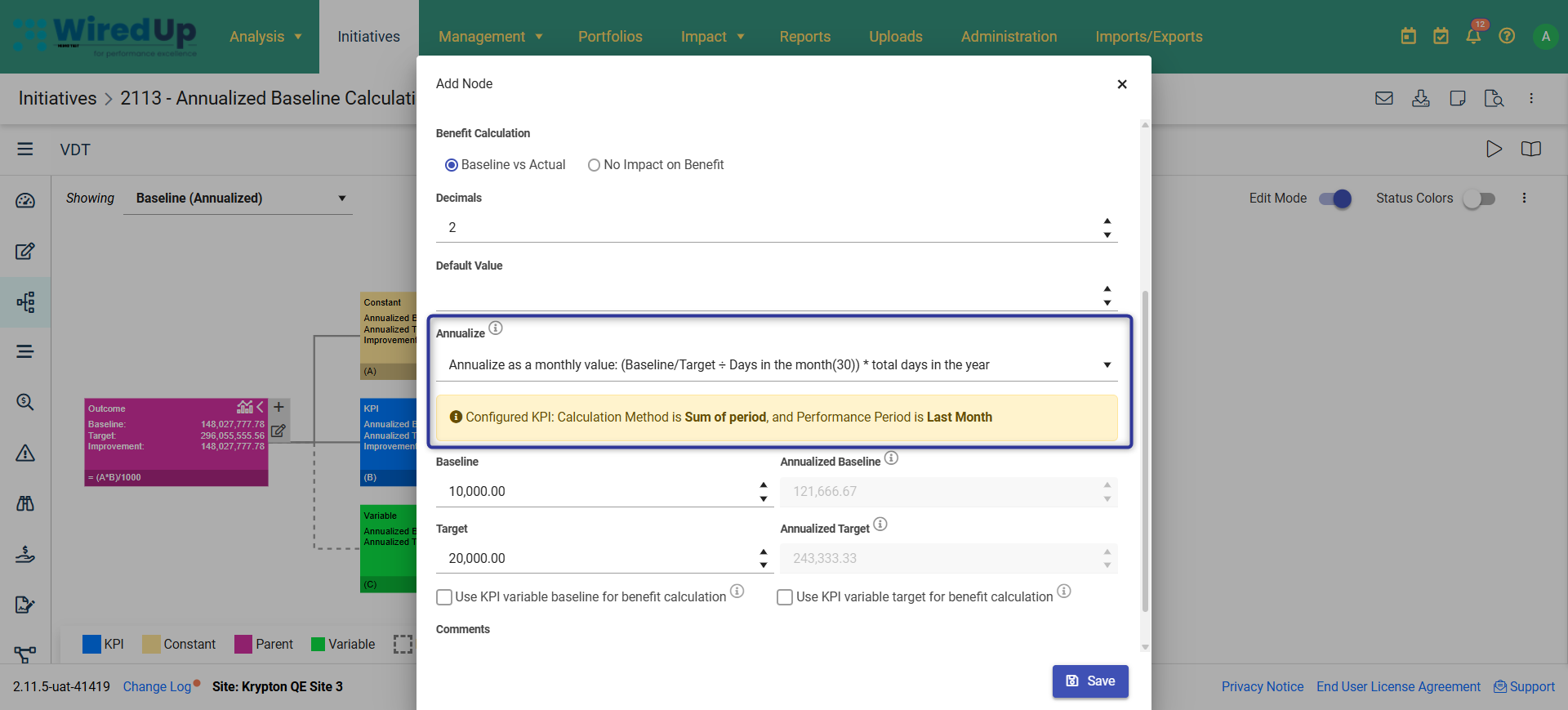
- Yearly or YTD Performance Period → "Do not annualize"
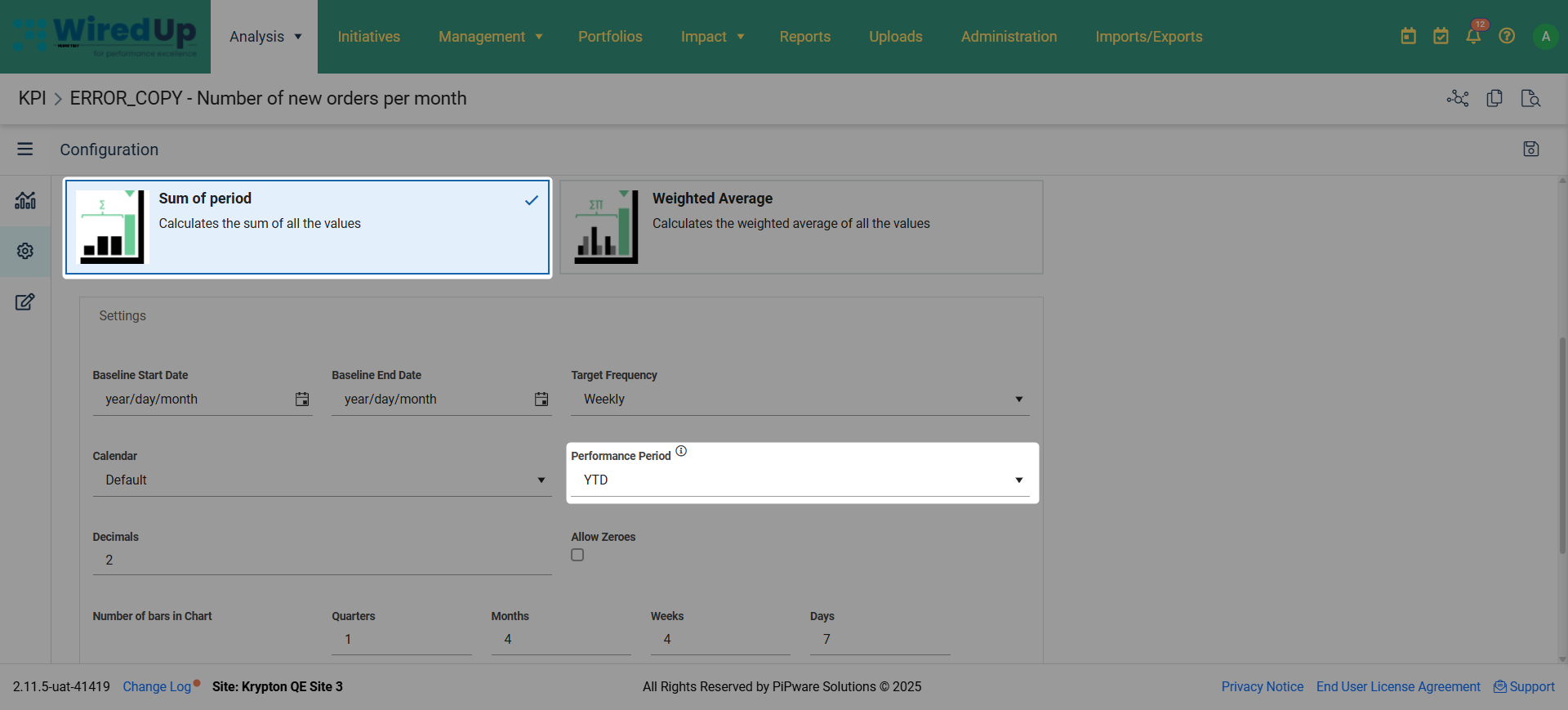
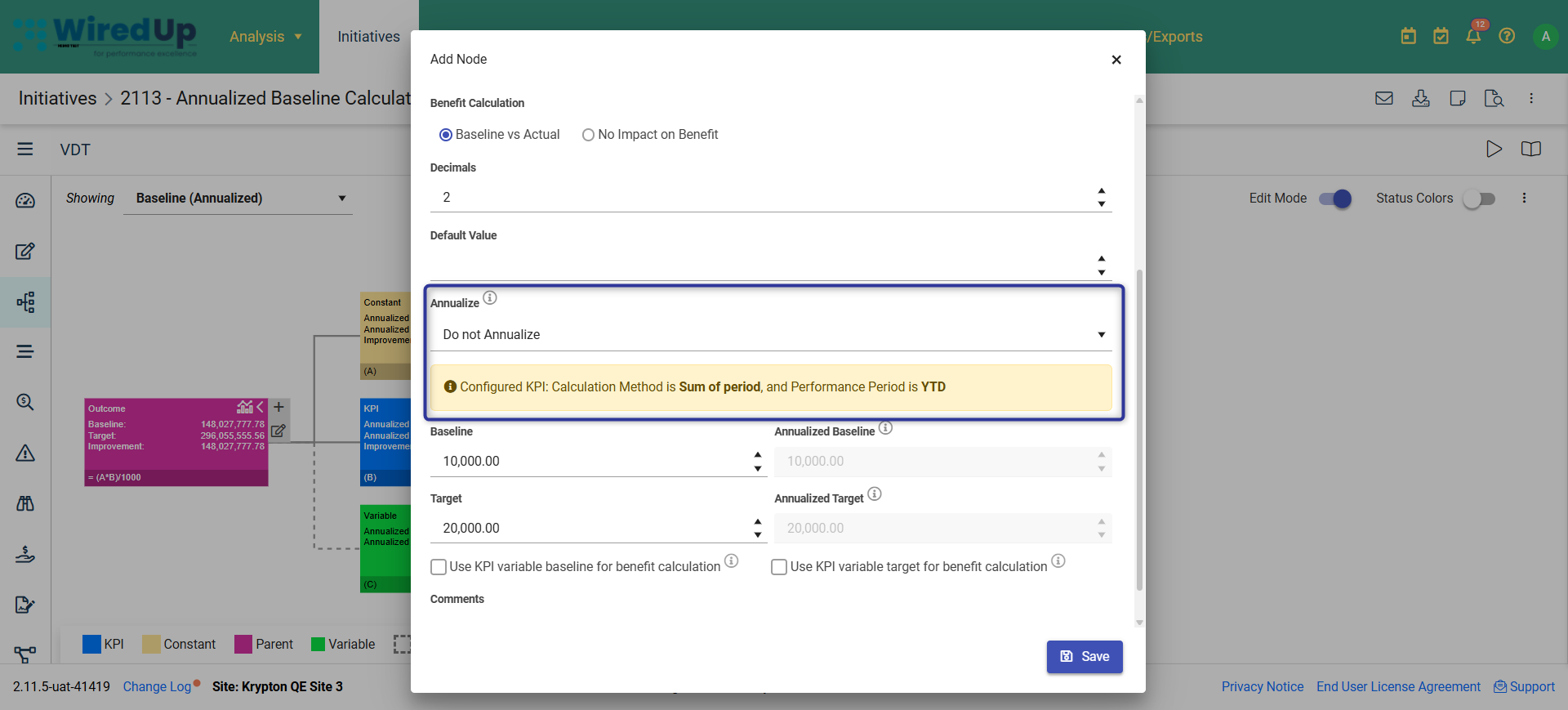
- Daily Performance Period → "Annualize as a daily value"
Examples:
For an existing KPI node, the following default configuration will occur:
- The default annualization configuration will be Annualize as a monthly value
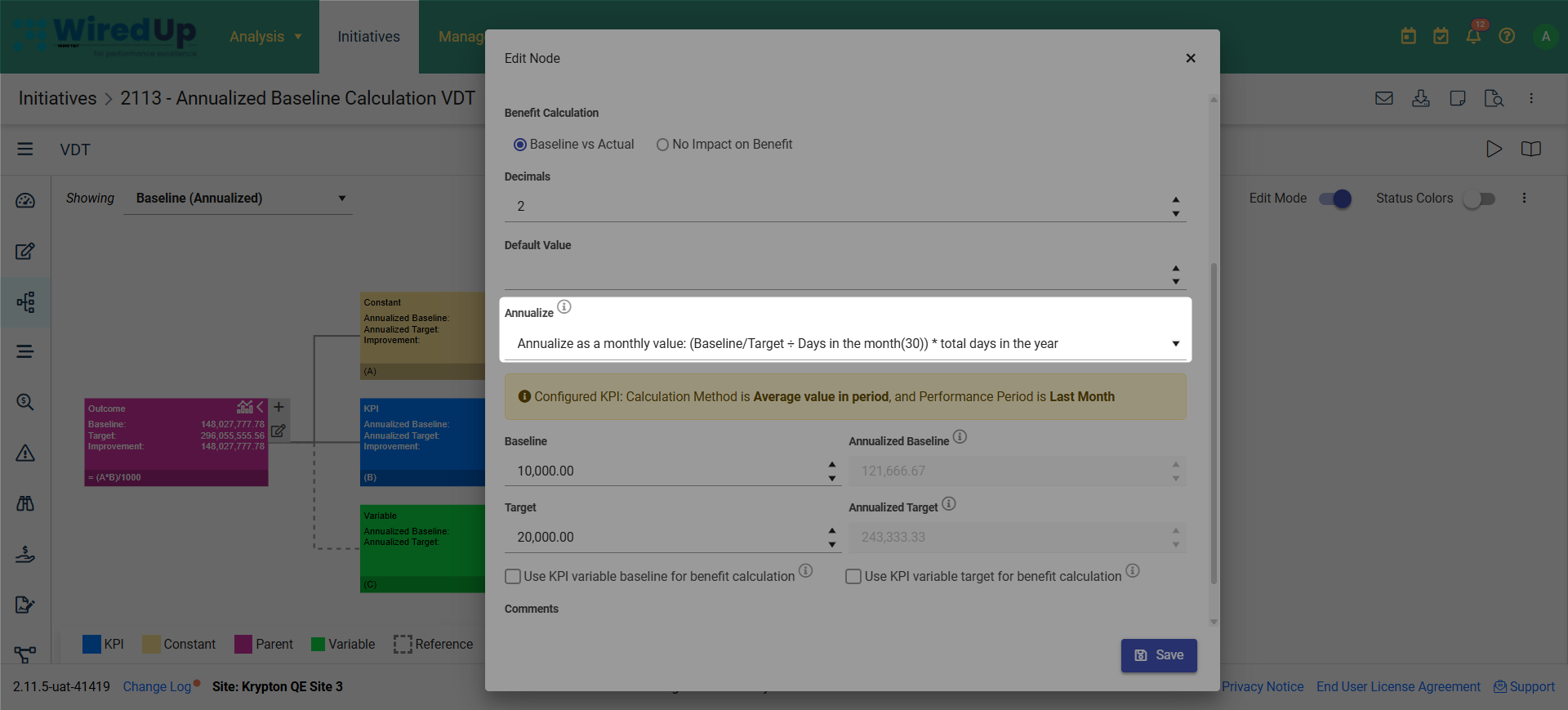
- The Annualized Baseline value is calculated as follows: (Baseline / DaysInMonth) x Total Days in a Year
(10000 / 30 (from site setting)) x 365 = 121 666, 67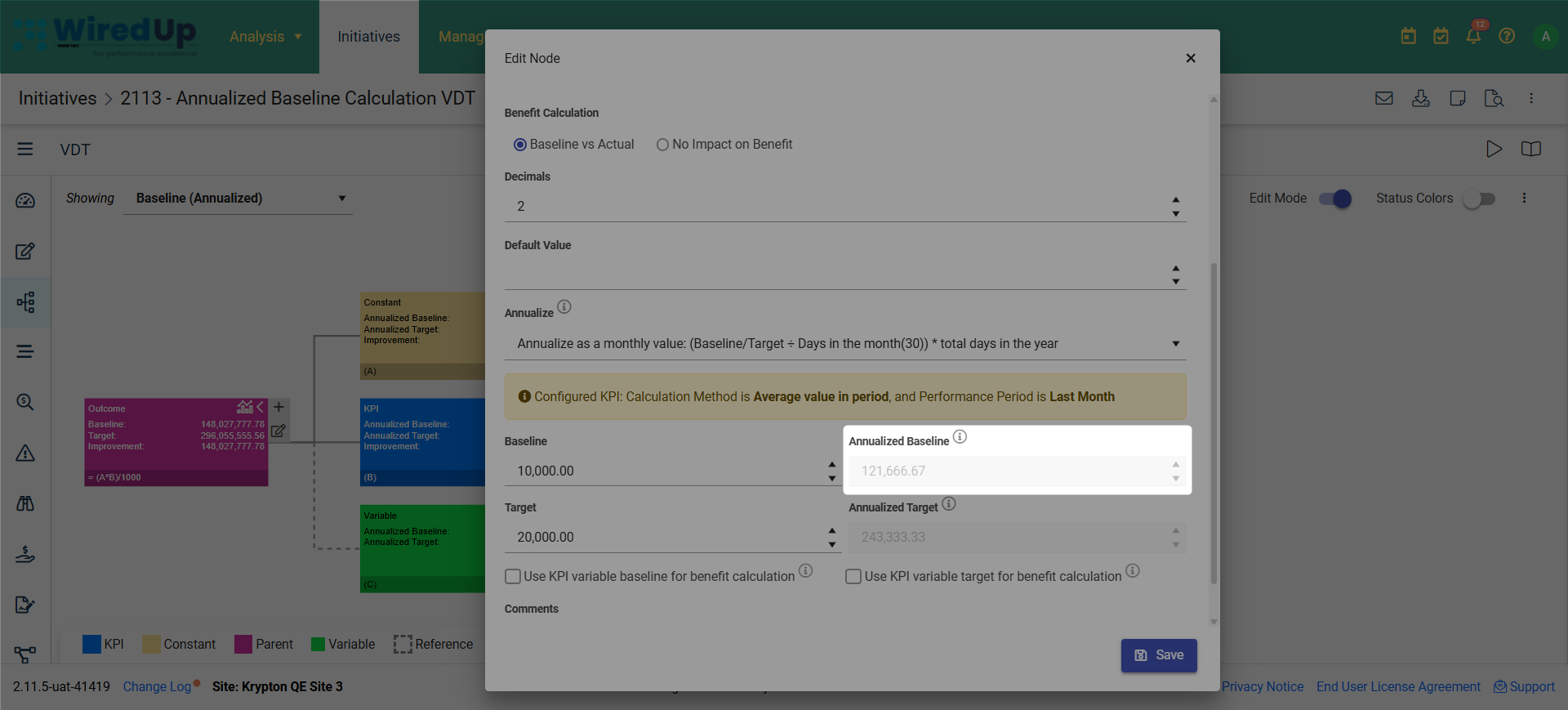
- The Annualized Target value is calculated as follows: (Target / DaysInMonth) x Total Days in a Year
(20000 / 30 (from site setting)) x 365 = 243 333,33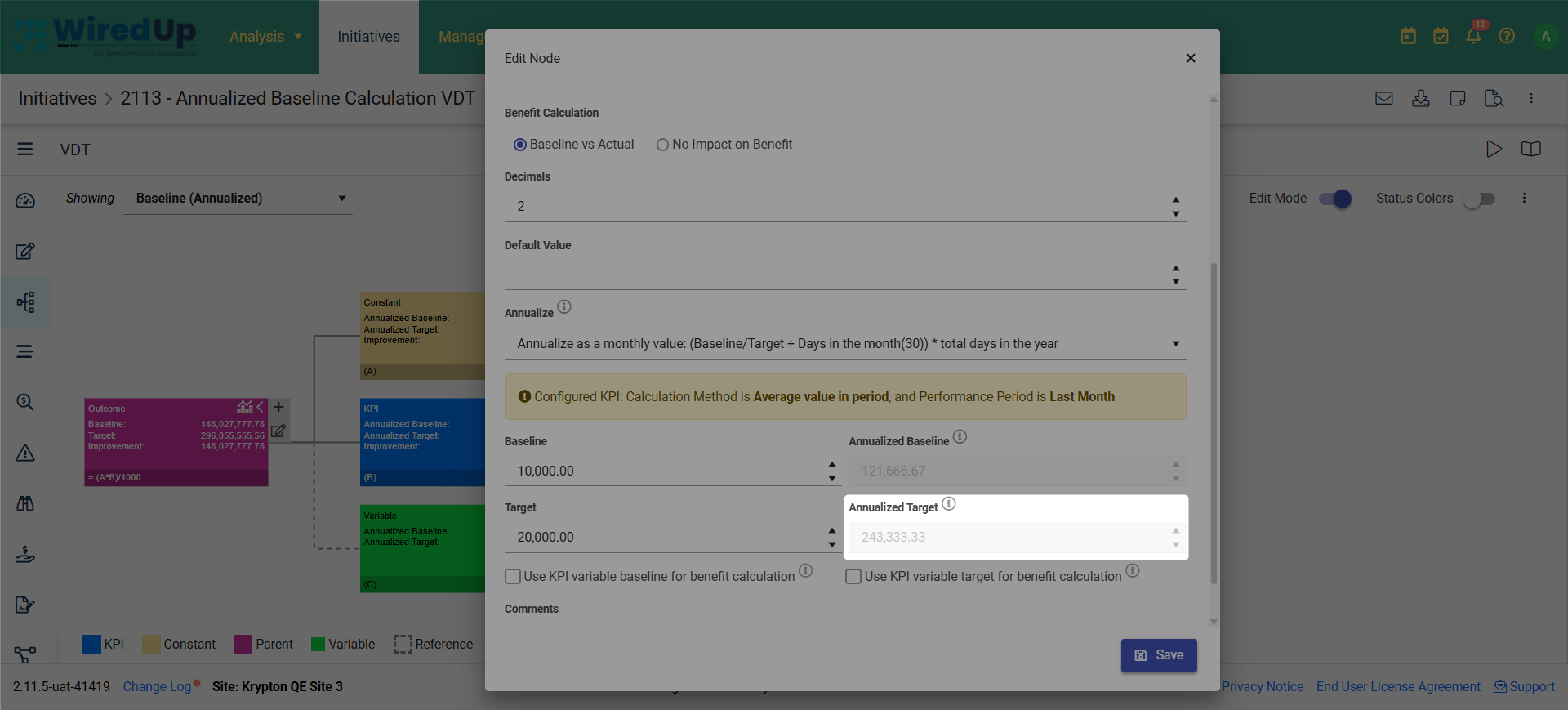
For a KPI with a Sum of Period Value Calculation Method and a Last Week performance period, the following default configuration will occur: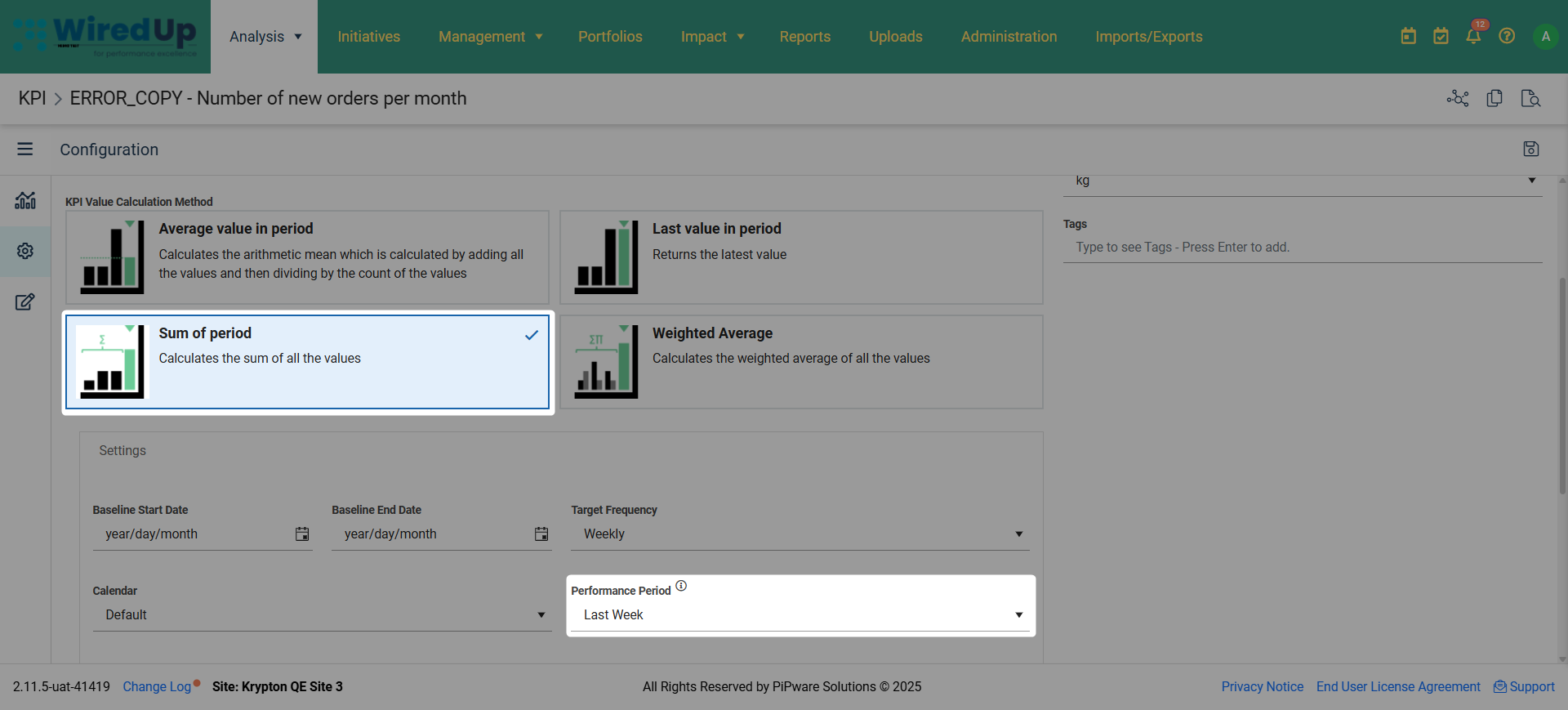
- The default annualization configuration will be Annualize as a weekly value
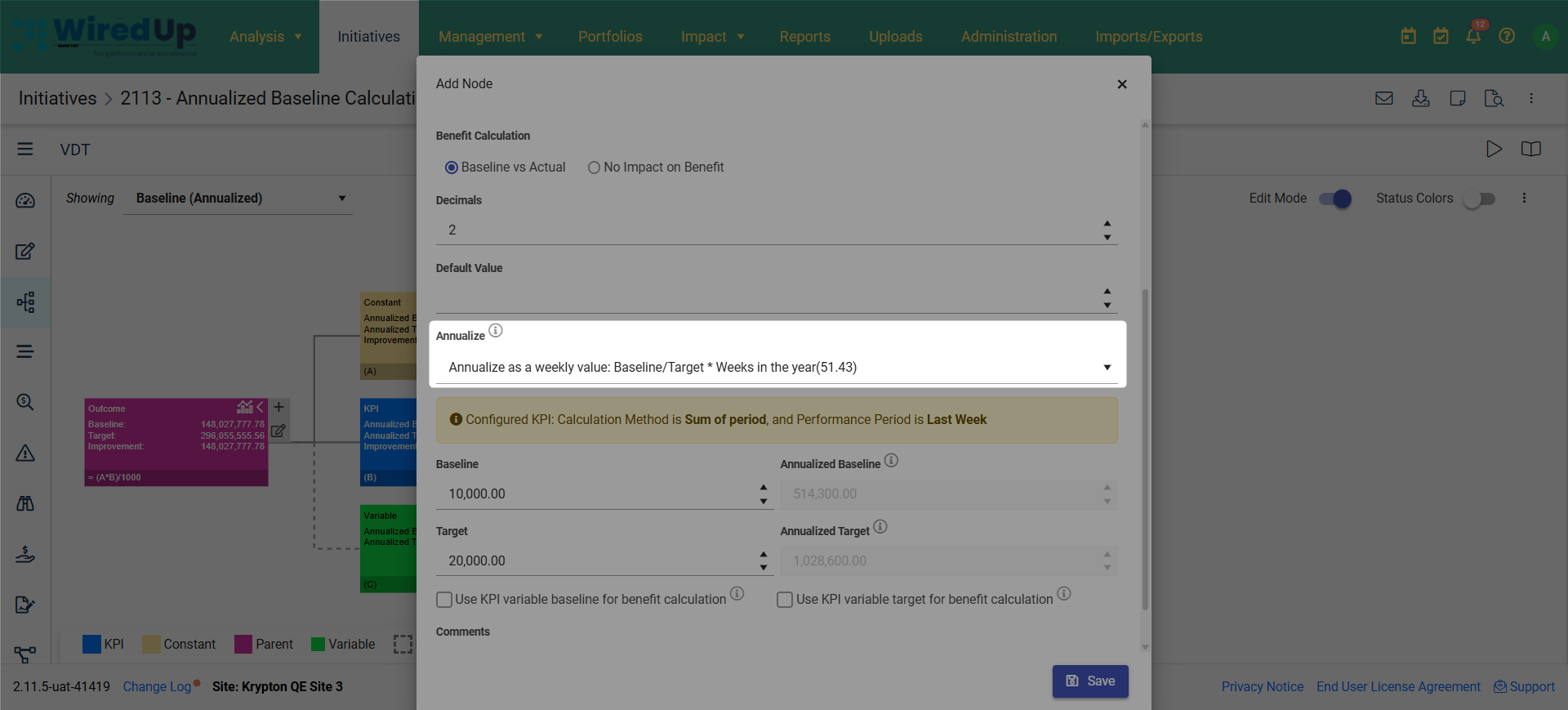
- The Annualized Baseline value is calculated as follows: Baseline x Weeks in a Year ((Days in Month Setting × 12) ÷ 7 (calculated to 2 decimal places))
10000 x 51,43 (30 (from site setting) x 12 ÷ 7) = 514 300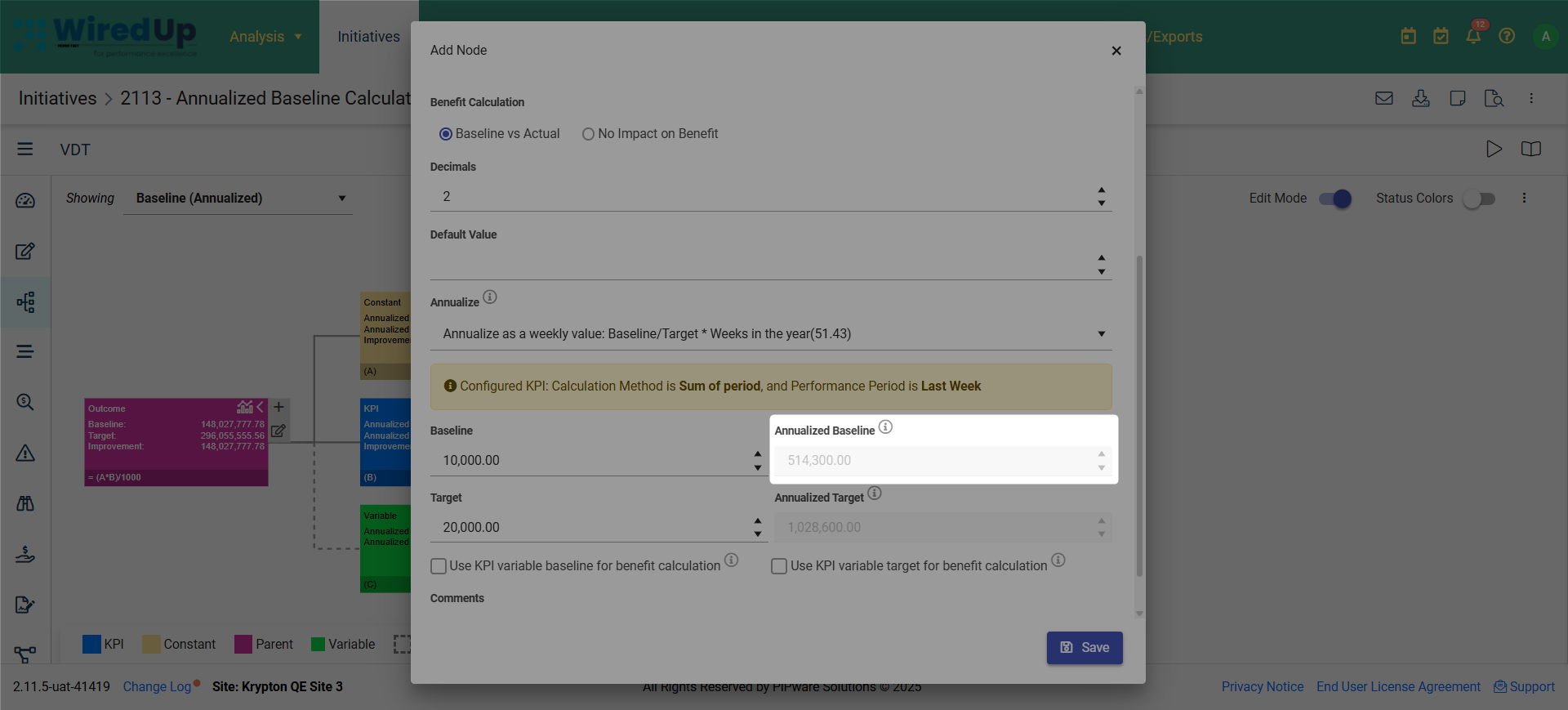
- The Annualized Target value is calculated as follows: Target x Weeks in a Year ((Days In Month Setting x 12) ÷ 7)
20000 x 51,43 (30 (from site setting) x 12 ÷ 7) = 1 028 600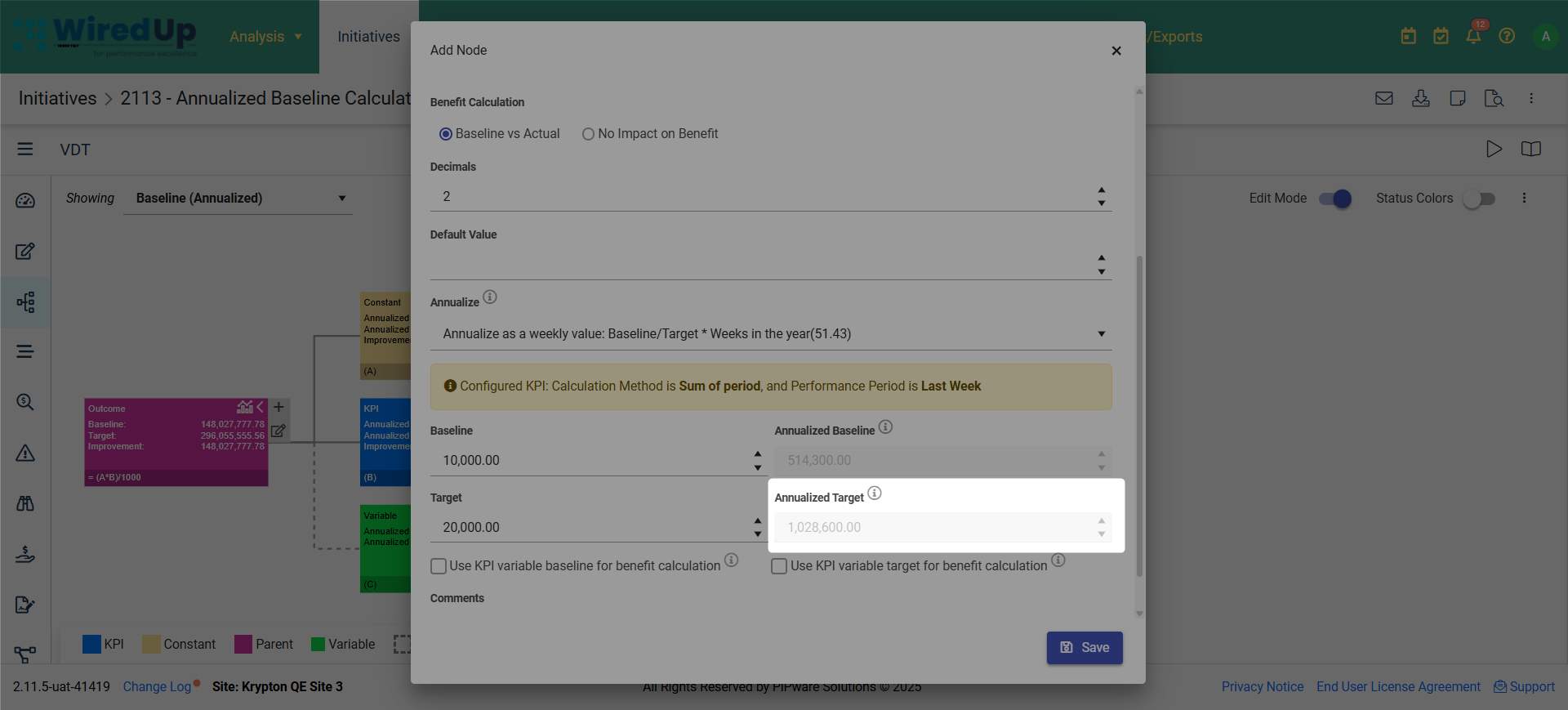
Understanding the Linked KPI Configuration
1. Information Box
Below the Annualize dropdown, an information box displays the linked KPI's configuration details, including:
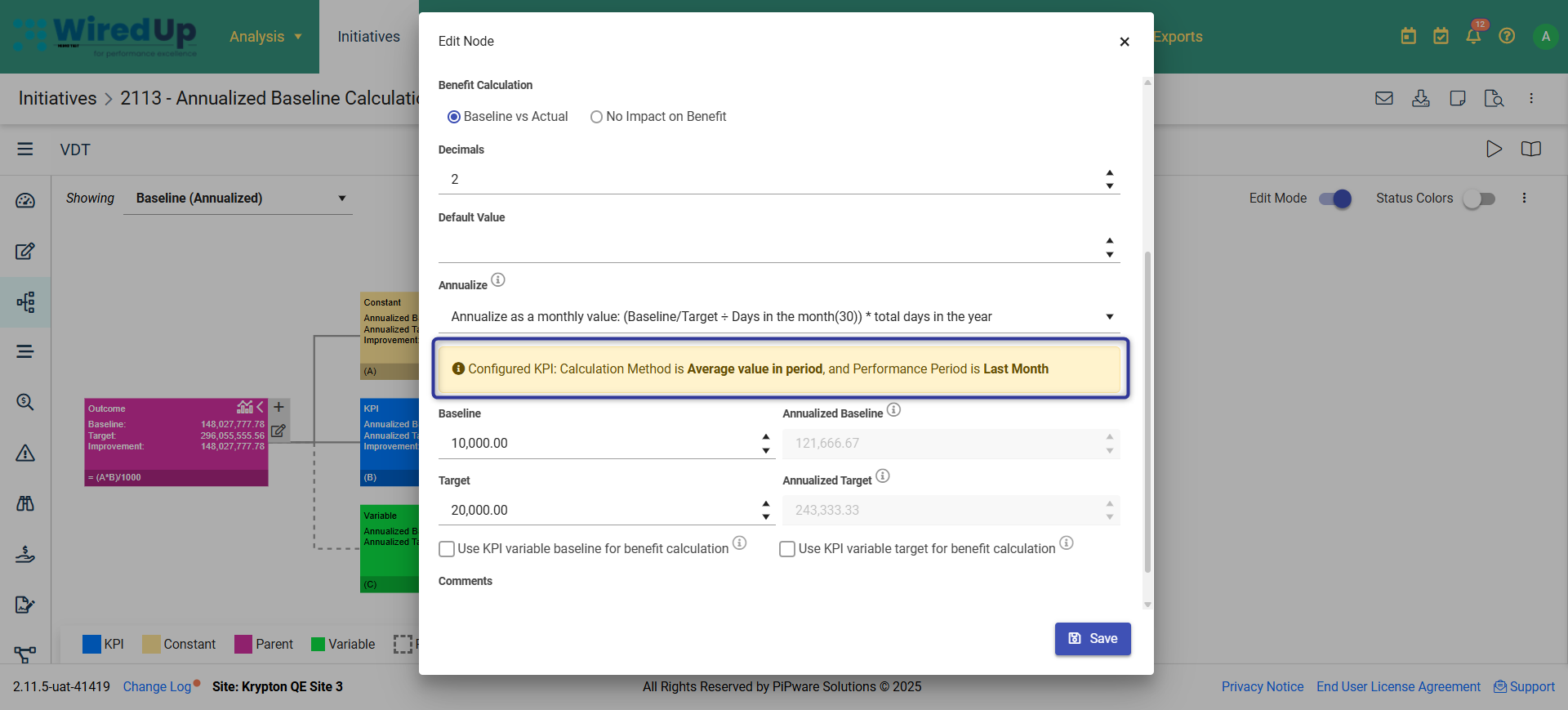
- The Value Calculation Method selected for the KPI
- The Performance Period selected for the KPI
This information assists in choosing the most appropriate annualization method for your node.
2. Dynamic Field Help
The following Field help tooltips have been included for this configuration. These field helps can be accessed by clicking on the 'i' icon next to the titles:
- On Annualize: gives further context about how the annualize configuration works
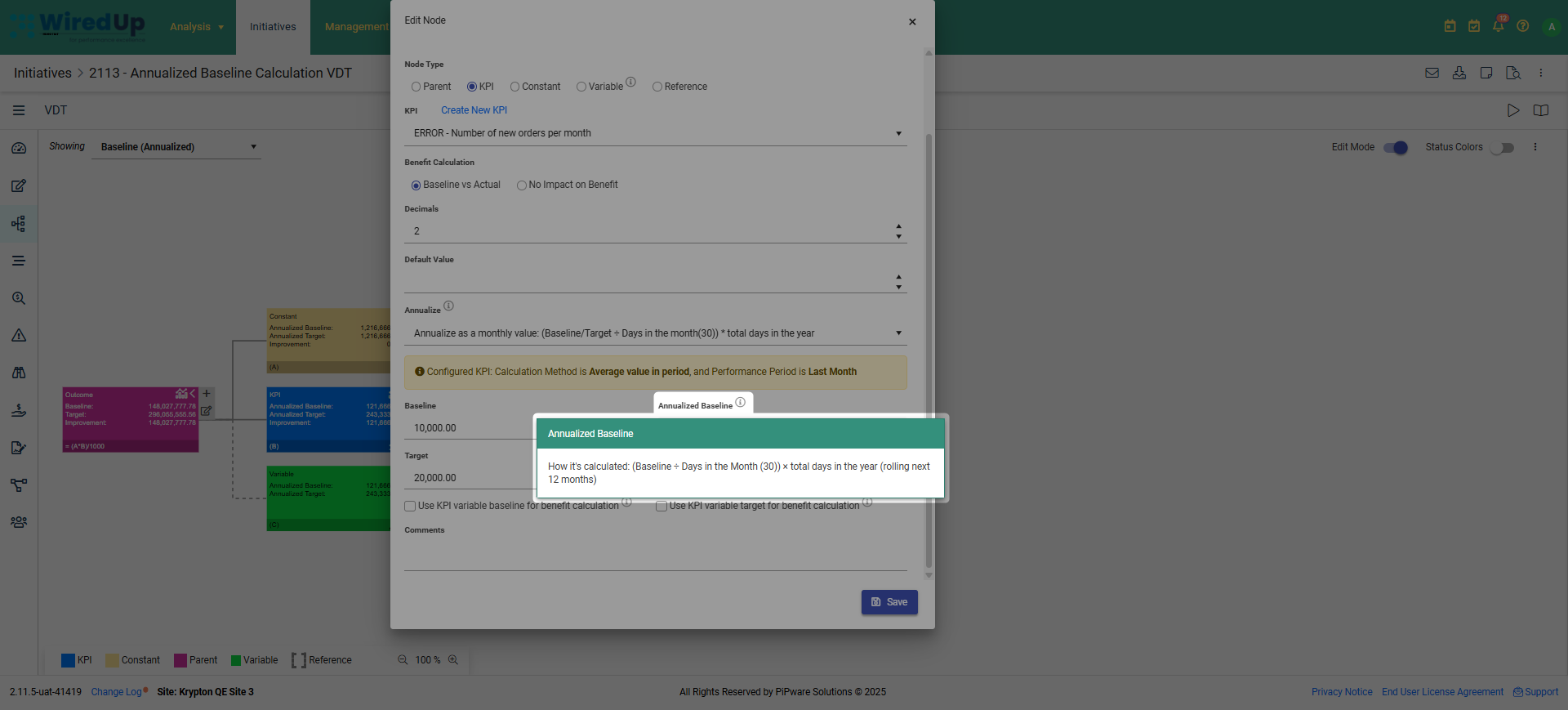
- On "Annualized Baseline" and "Annualized Target": dynamically updates to display the correct formula and constants based on your selected annualization option, making it easy to understand how the values are calculated.
NB: Updates to KPI Default Baseline and Target Values


If the default Baseline and Target values are updated on the KPI, the updated values will not be displayed on the VDT Baseline view as it is used for planning purposes. To update the values on the Baseline view, you will need to either:
    Reselect the KPI on the KPI node, or
    Override the default Baseline and Target values on the KPI node via the Edit Node view
NB: Updates to KPI Calculation Method or Performance Period
If a KPI's Value Calculation Method or Performance Period is subsequently updated after selecting an annualization setting, the changes will not be reflected on the Baseline view . You will need to reselect the KPI on the KPI node in order for the changes to be reflected on the Baseline view.
Affected Areas for Annualization Configuration
The new annualization configuration feature impacts several areas where VDT nodes are created or updated. The system ensures that the intelligent default annualization settings are consistently applied across all these scenarios.
VDT Template Import (NB!! Coming Soon for 2.11.5-1 Release)
When importing a VDT template that has an annualization mode specified, and a Variable or KPI node is updated via the import template:
- The system automatically applies the default annualization selection rules based on the linked KPI's Calculation Method and Performance Period
- The appropriate default option is set according to the logic described in the "Default Annualization Behavior" section above
- This ensures that imported nodes maintain consistency with the KPI's configuration
VDT Library Import
When importing a VDT from the library that has an annualization mode specified, and a Variable or KPI node is created via the library import:
- The system automatically applies the default annualization selection rules based on the linked KPI's Calculation Method and Performance Period
- The appropriate default option is set according to the logic described in the "Default Annualization Behavior" section above
- This ensures that library-imported nodes are configured with suggested starting values
If the default selection was overwritten/changed, the VDT library will save the selection in the library at the time.
VDT Concept Ideas
When a VDT has an annualization mode specified, and a Variable or KPI node is created via concepts:
- The system automatically applies the default annualization selection rules based on the linked KPI's Calculation Method and Performance Period
- The appropriate default option is set according to the logic described in the "Default Annualization Behavior" section above
- This ensures that concept-generated nodes follow the same suggested defaults
Affected Areas
When the Annualization Site Setting has been set to 'Enable Annualize Option on VDT' or 'Annualize', the Annualization of the Baseline values from the VDT will affect the following areas within the WiredUp system:
- Idea/Initiative Overview: the new Improvement value from the VDT will be displayed
- Idea/Initiative Pipeline List and Card view: the new Improvement value will be displayed in the Value columns of the List view as well as on the drop-down in the content bar of the List and Card view to allow the user to change the view to either display Annualized or Not Annualized (default) values.
- Idea/Initiative List Excel Download: added a column next to the initial Financial Improvement Value and each Non-Financial Improvement Value, which will show the corresponding Annualized Value
- Idea/Initiative List PDF Download: the download will show both the initial (Default) Improvement Value and Annualized Improvement Value
- Idea/Initiative Export: renamed the current "Annualized Value" column to "Value" and added a new "Annualized Value" column displaying the Improvement value as calculated in the VDT baseline view
- Ideas Bulk API: ensured that the 'annualizedValue' field in the API, sources the correct value based on the VDT Baseline Annualization feature on the UI
- RAR Ideas/Initiatives List/Card view: added a "Showing" label and a new drop-down in the content bar for "Values" to allow the user to change the view to either display Annualized or Not Annualized (default) values
- Forecast Export: next to the 'Value' column, we added a new "Annualized Value" column on the Forecast export Excel file, displaying the Improvement value as calculated in the VDT baseline view
- Portfolio Idea/Initiative List and Card view: added a "Showing" label and a new drop-down in the content bar for "Values" to allow the user to change the view to either display Annualized or Not Annualized (default) values
- Top 25 Dashboard widget: Add a ' Display Values' dropdown on the Top 25 widget to show either initial (default) Improvement Values or calculated Annualized Values
- Portfolio Value Dashboard Widget: added a new 'Display Initiative Total' drop down to the portfolio configuration widget, that will allow the 'Initiative Total' to either show Initial (default) Improvement Values or Annualized Values. The display of the new dropdown is dependent on the 'Value' field being set to the option "Initiative Total"
- Pending & Outstanding Approvals Widget: a 'Display Values' dropdown is added to the Pending & Outstanding Approvals Widget configuration. This drop-down offers two options:
- Not Annualized: which will display the original improvement values
- Annualized: which will display the calculated annualized values
- Emissions Initiative Impact Table: added a 'Values' dropdown that will allow the user to view either the initial (default) Emissions Improvement Value or the Emissions Annualized Value
- Emissions MACC Table: added a 'Values' dropdown that will allow the user to view either the initial (default) Emissions Improvement Value or the Emissions Annualized Value
- Cumulative Benefit Excel Download: renamed the current "Annualized Value" column to "Value" and added a new "Annualized Value" column displaying the Annualized value as calculated in the VDT baseline view. This change was made in the following sheets from the Cumulative Benefits Excel Download:
- Benefit Calculation
- Forecasts
- Actuals
- Year-to-Date
- Cumulative Pipeline Report: added a new filter option to either show initiatives that are not annualized or that are Annualized
- Benefit Contribution Report: added a new filter option to either show initiatives that are not annualized or that are Annualized